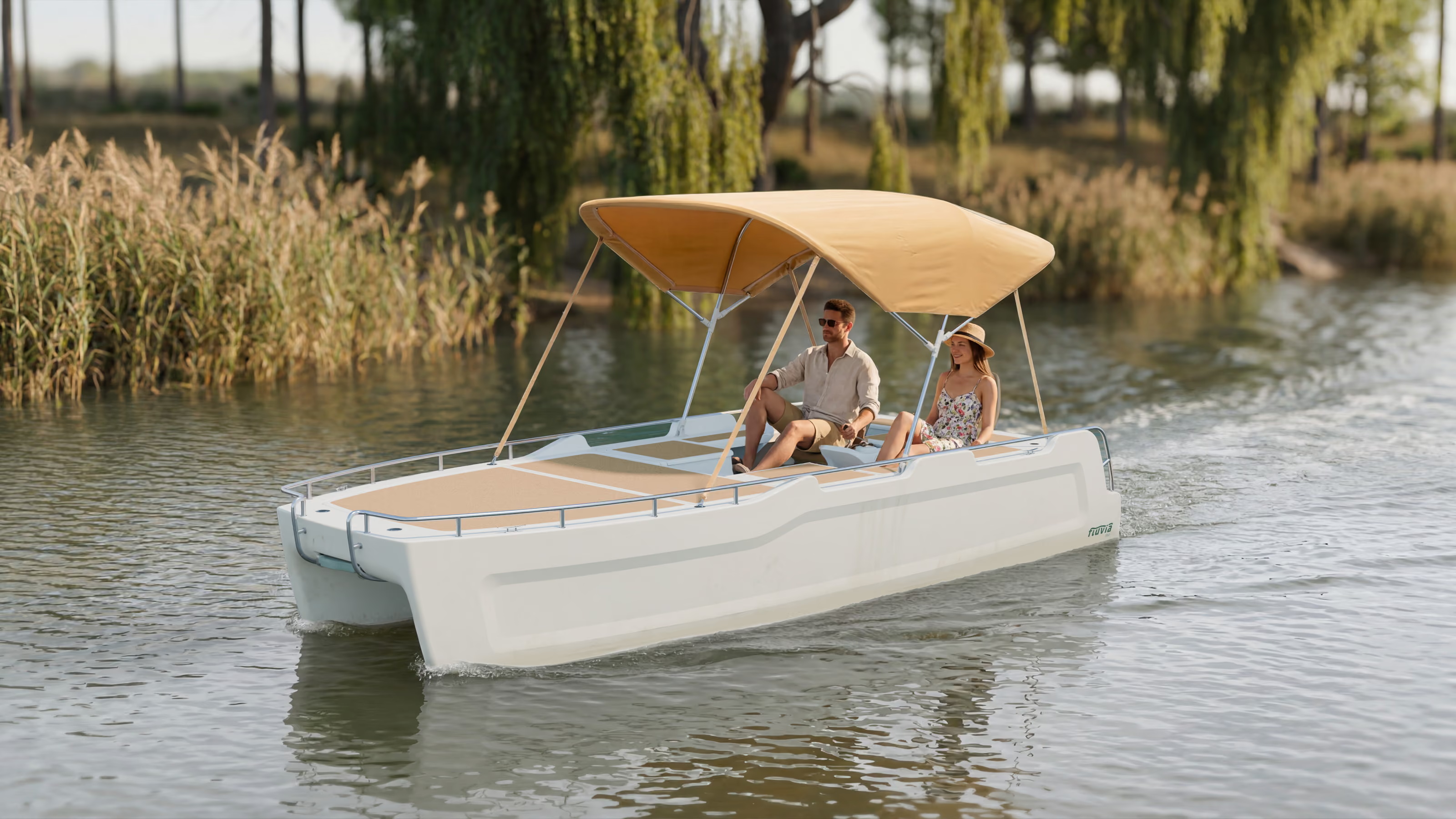
The Fluvia 550 cruising on a river, two people under its sun canopy

01 — Master project · 2026

Fluvia 550

Vacation on the River

Date
2026
Duration
1.5 years
Cooperation
judel/vrolijk & co design + engineering GmbH
Advisors
Jan Kuhnert, Magnus Feil
Tools
Miro, Rhinoceros 3D, Blender, Nano Banana Pro, Adobe CC

Fluvia is a concept for a beginner-friendly boat system for multi-day travel on rivers. The project combines slow tourism, low-threshold access to boating, and environmental awareness in one coherent mobility experience.

MOTIVATION

ORIGIN & RESEARCH

The project emerged from three observations: my internship at judel/vrolijk, the underused river landscapes of Northern Germany, and the saturation of the conventional yacht market. Together, these factors suggested the need for a new type of recreational boat focused on accessibility rather than status.

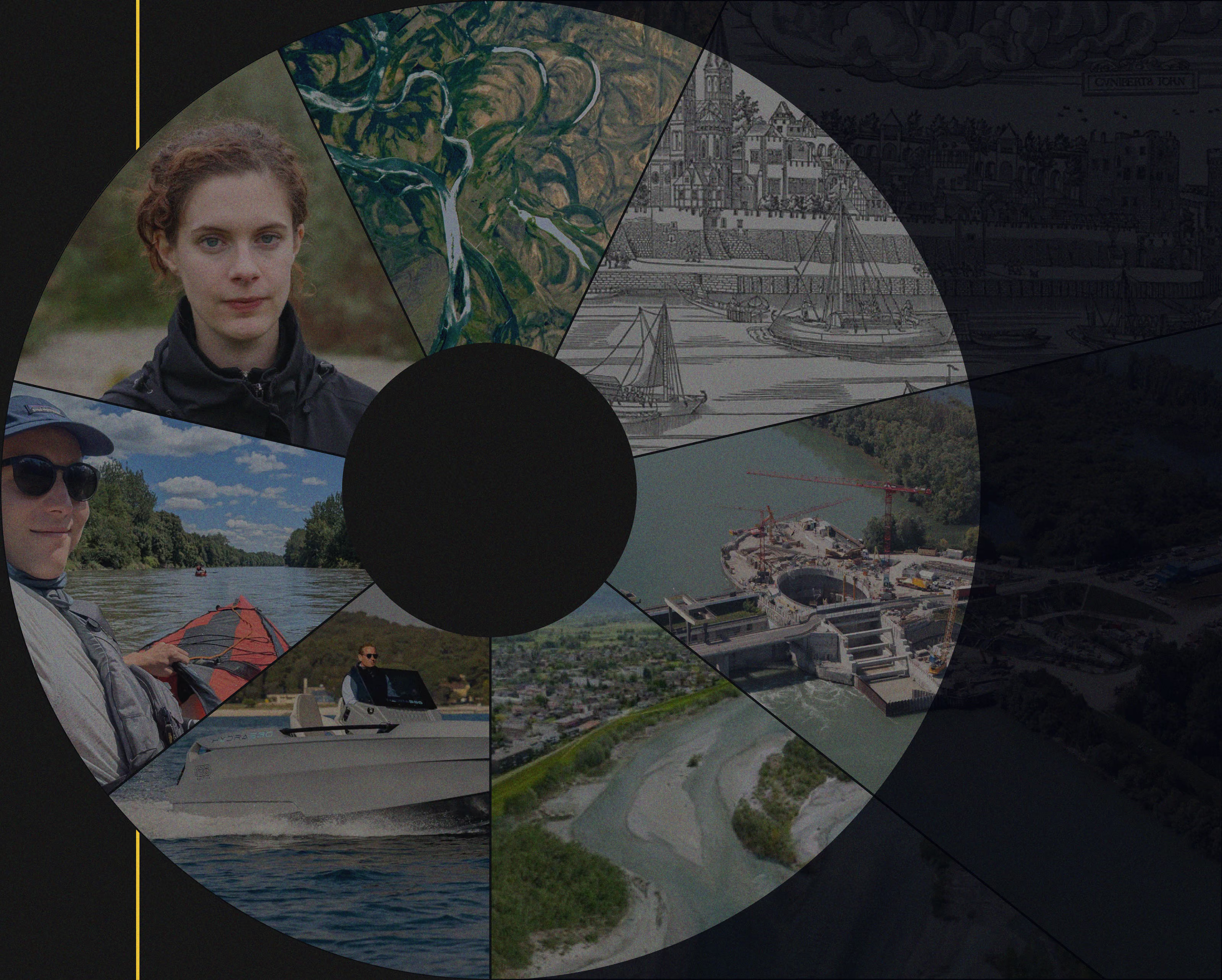
The project began with an open research phase to understand what already exists and what could make sense for the concept. This included looking into river ecology, river history, expert perspectives, market options, and field research to build a broader understanding of the topic.

motivation

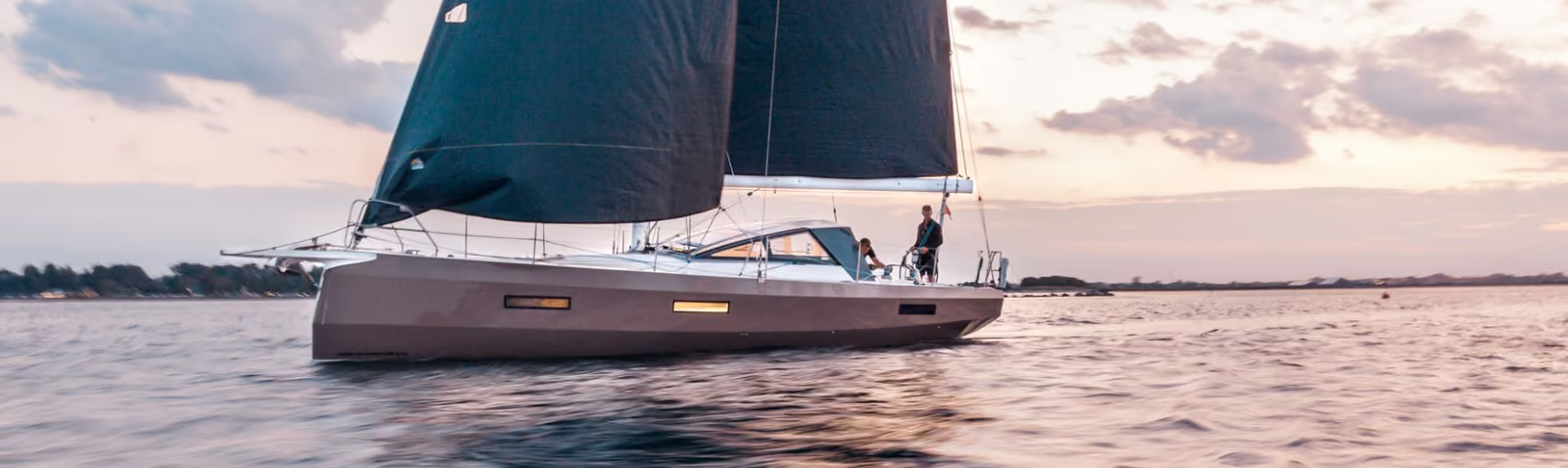
A judel/vrolijk yacht under sail

internship at judel/vrolijk & co

yacht design & engineering studio in Bremerhaven

+

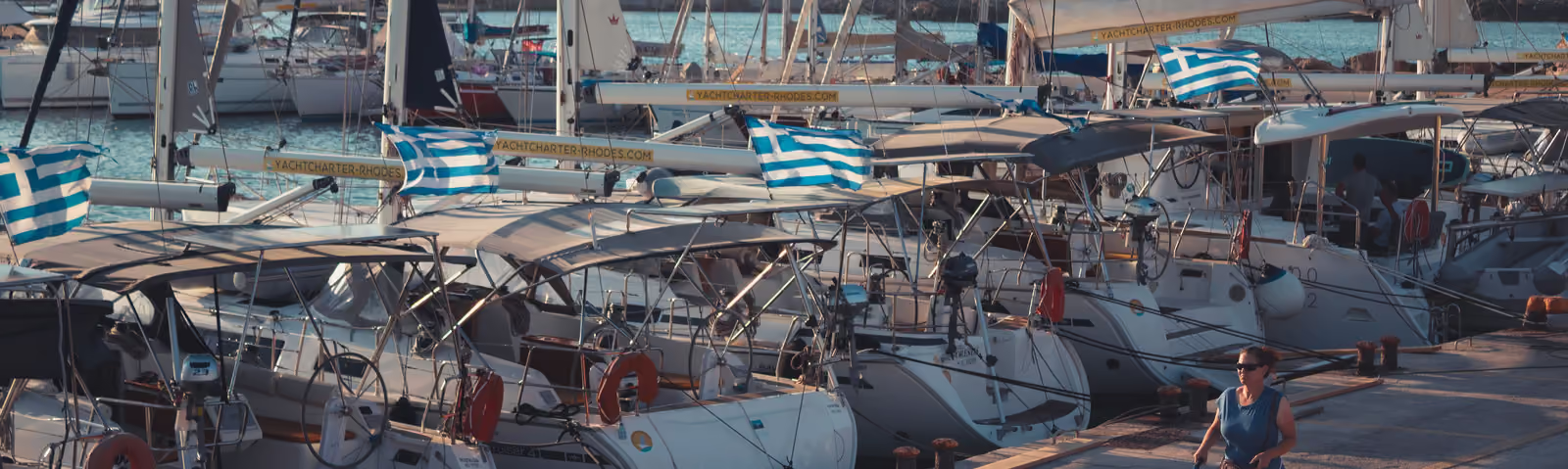
Crowded marina with moored yachts

saturated yacht market

crowded marinas at croatia & greece

+

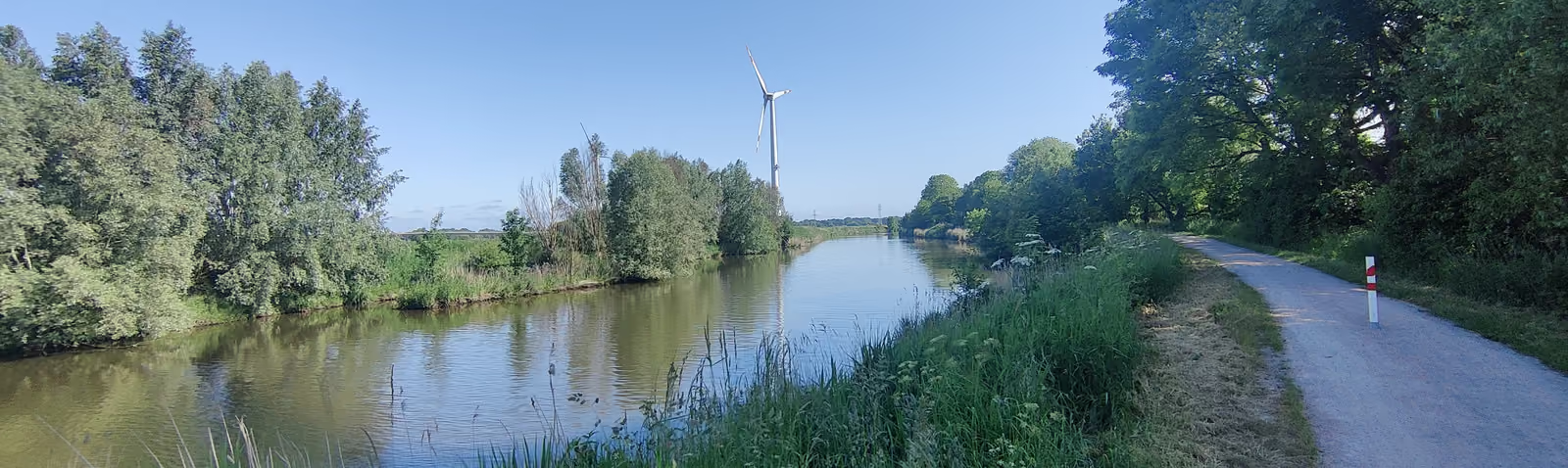
A quiet river in Northern Germany

rivers of northern germany

unused potential at local rivers

Research wheel: seven wedge-shaped images, one per research topic

1

the natural river

What does a natural river look like?

ecology and morphology

2

humans and rivers

How have people shaped rivers over time?

historical use and development

3

river under pressure

How is the river ecosystem holding up?

effects of human influence

4

river revival

What rules and conditions exist on a revitalized river?

5

market compass

What options already exist?

campers, boats, excursion ships

6

field expeditions

Experiencing Rivers and Boats.

paddling, excursion cruises,
the „Boot Düsseldorf“

7

expert voices

What do experts say?

Marie Pfeiffer, Stephan Monitzer, Stephan Weisskopf

research

A GAP AND A CHANCE

ACCESS CREATES AWARENESS

The project responds to two opportunities: a market gap for accessible, license-free river travel and a lack of public awareness for rivers in ecological imbalance. By creating a new form of river tourism, it aims to build both economic relevance and public support for healthier, more resilient river landscapes.

the gap

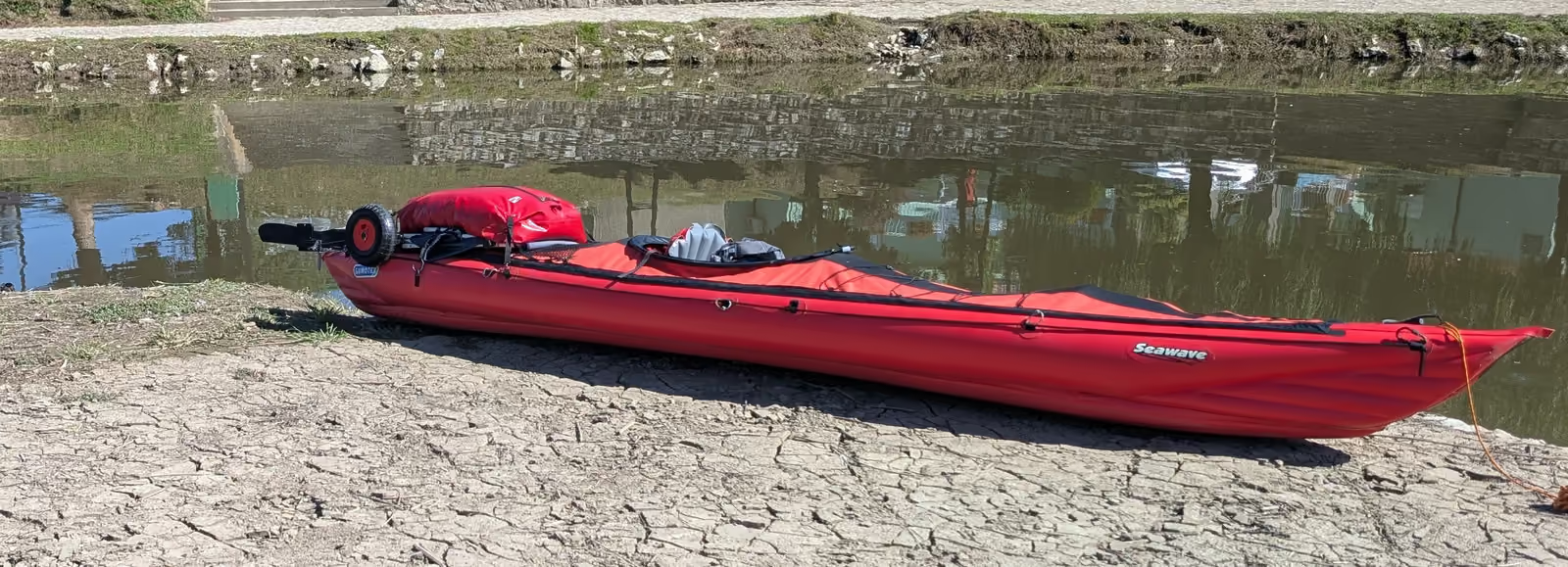
A kayak on a river bank

kayak

„Tent on the water“

unprotected, autonomous, minimalist,
unregulated, active

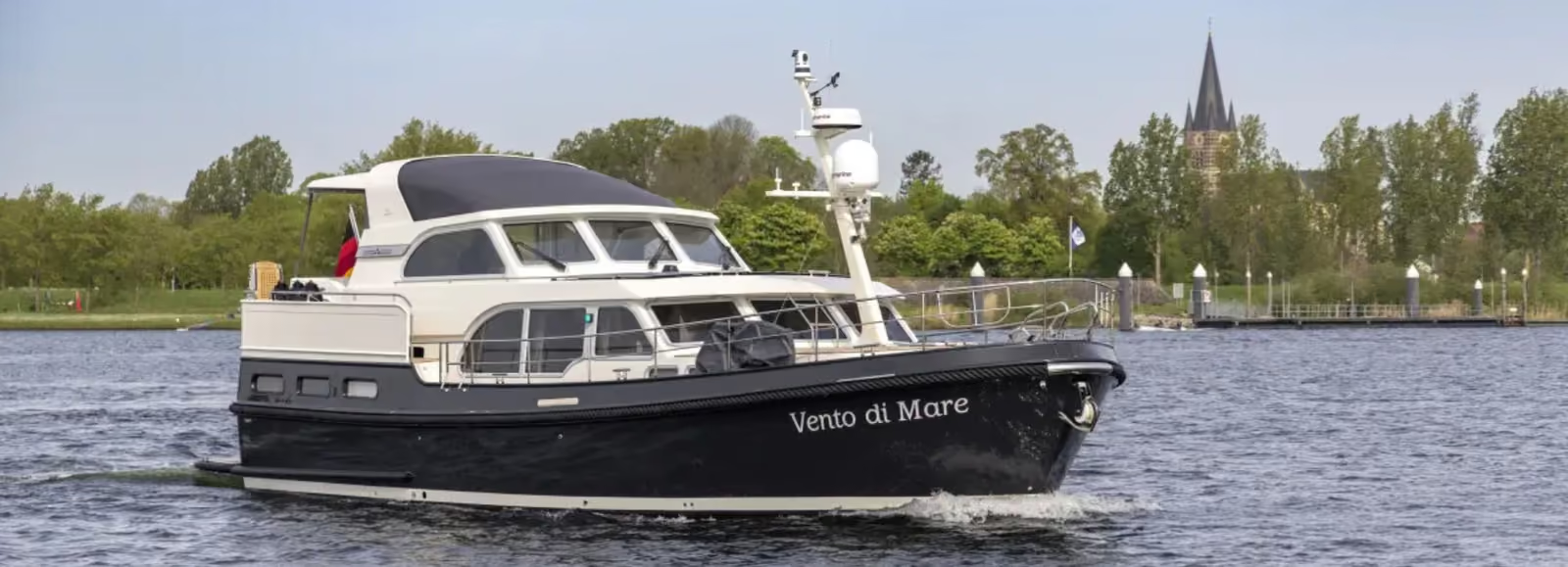
A motor yacht on a canal

yacht

„Holiday Home on the water“

private, protected, autonomous, luxurious, regulated

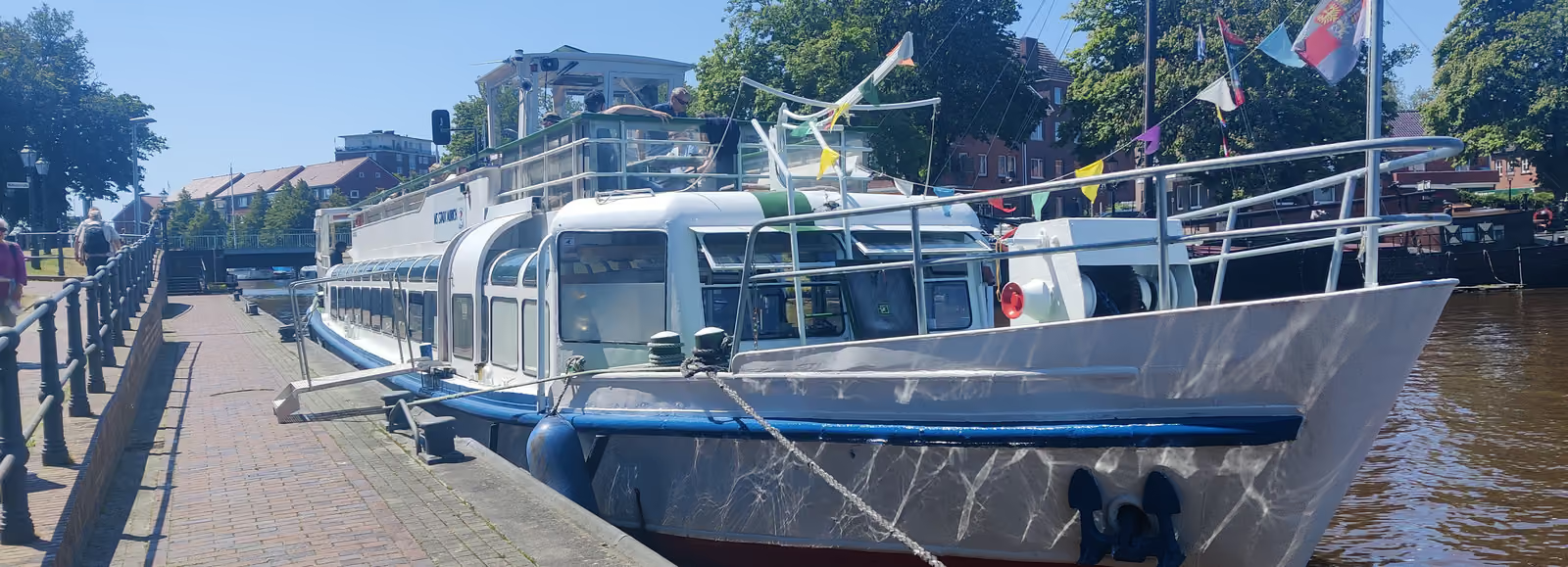
A river cruise ship at its pier

excursion/cruise ships

„hotel/restaurant on water“

collective, passive, guided, serviced

?

a new boat concept

„Camper on the water“

autonomous, safe, active, reduced, comfortable, accessible

the goal

a new way to experience rivers

A self-directed travel experience that combines comfort, orientation, and river awareness

— kept low-tech and accessible.

the chance

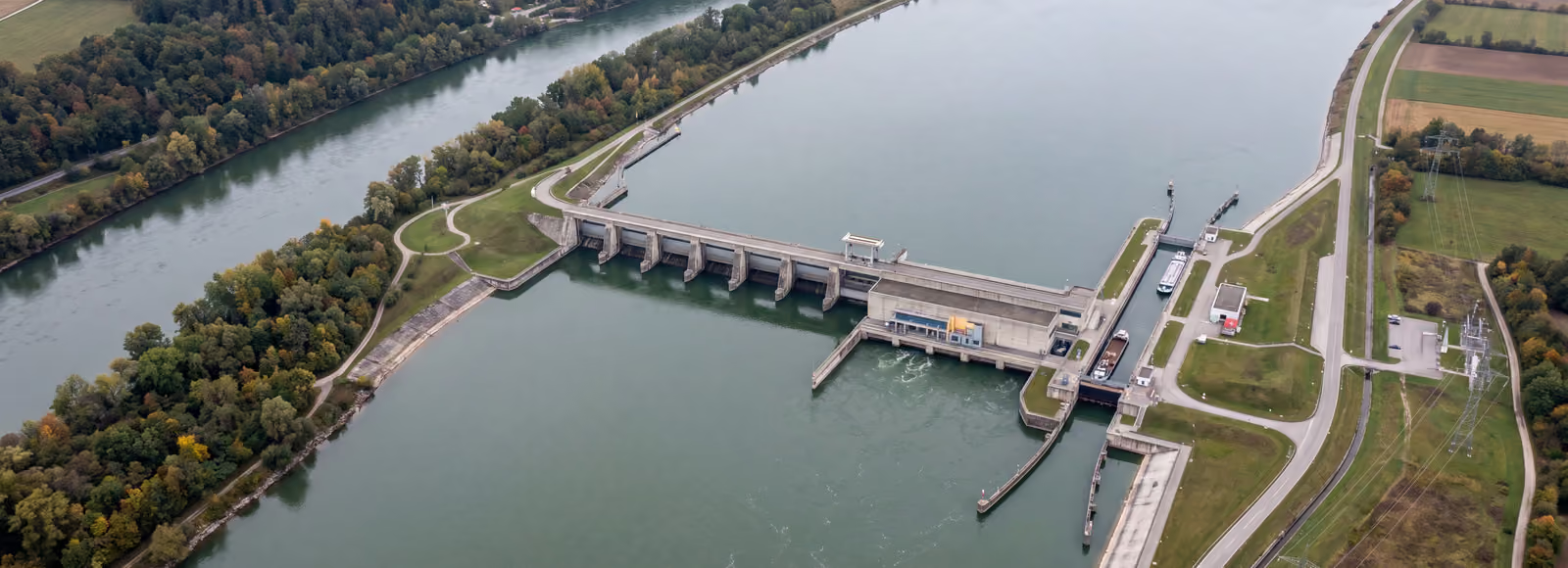
Aerial view of a dammed river with a hydropower plant

rivers out of balance

Natural dynamics have been disrupted

Dams, levees, regulation, interrupted sediment transport

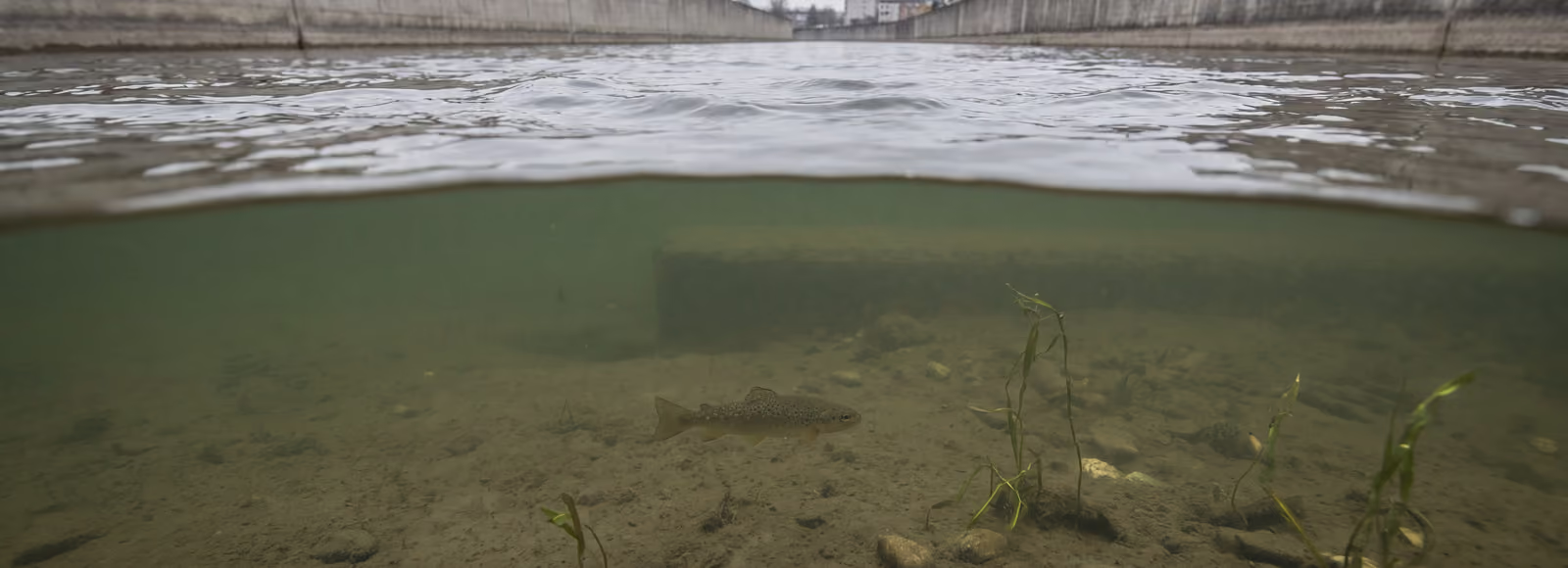
Half under water: a river bed and its surface

ecological consequences

Habitats, species, and ecosystem functions are under pressure

Biodiversity loss, habitat degradation, fragmentation, blocked fish migration, algal blooms, erosion

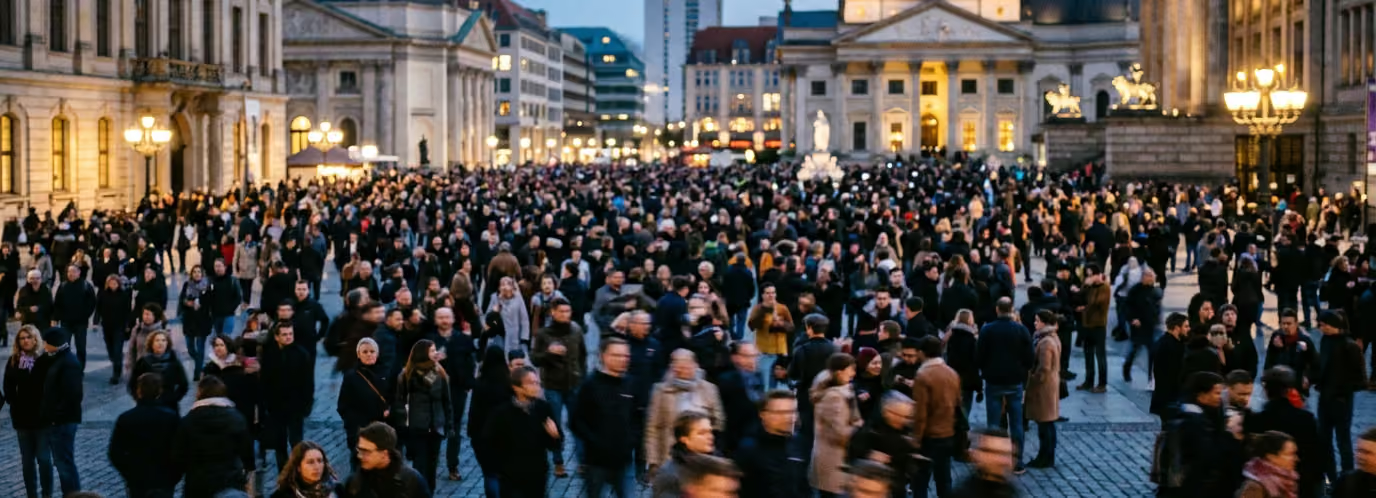
A crowd in a city square at dusk

need for public awareness

What remains unseen is rarely supported.

River literacy, visibility, education, public awareness, public support, revitalization.

river knowledge as part of the journey

Awareness is embedded in the travel experience.

integrated, low-tech, contextual, accessible,
immersive, educational

CONCEPT DEVELOPMENT

IDEATION

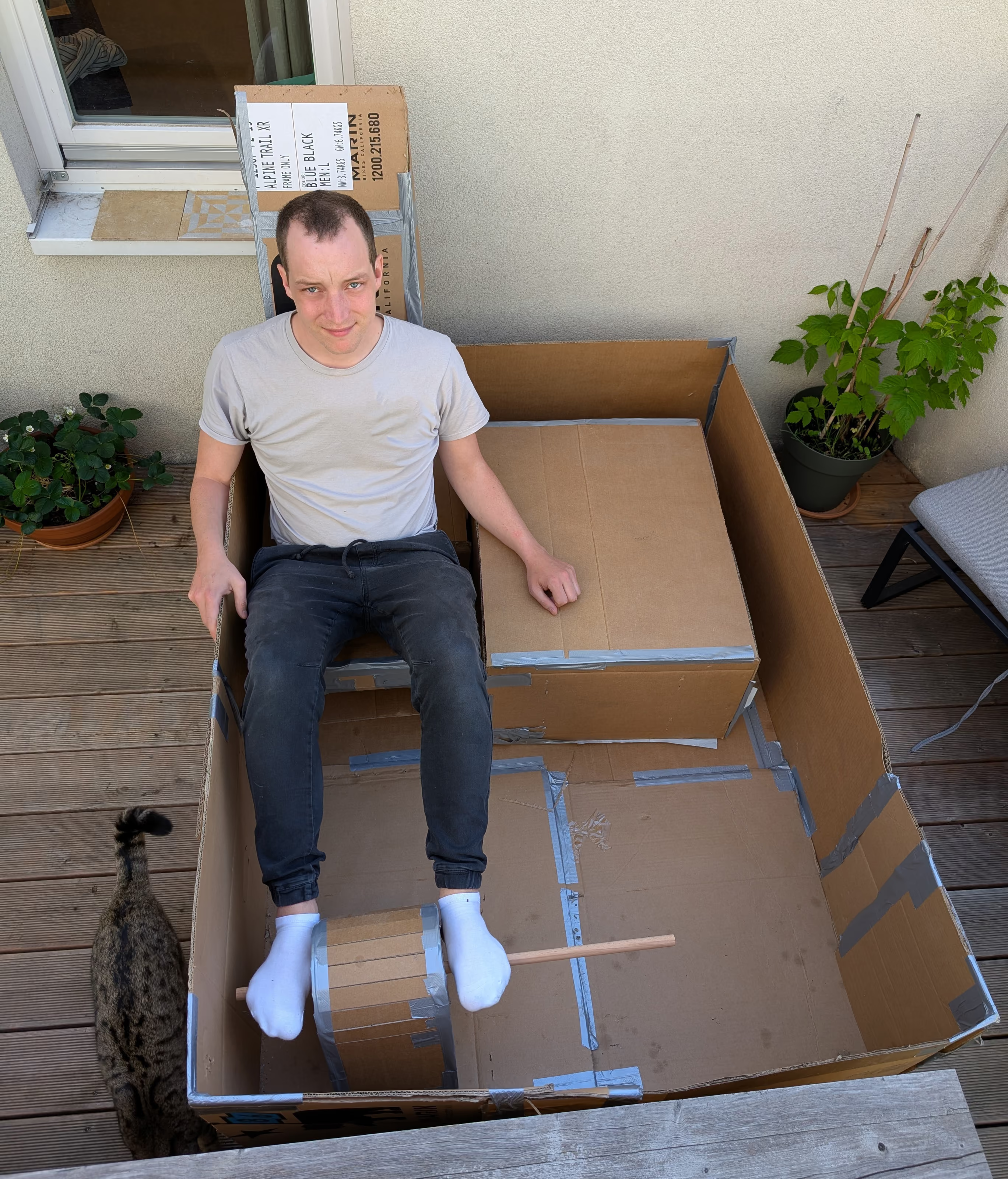
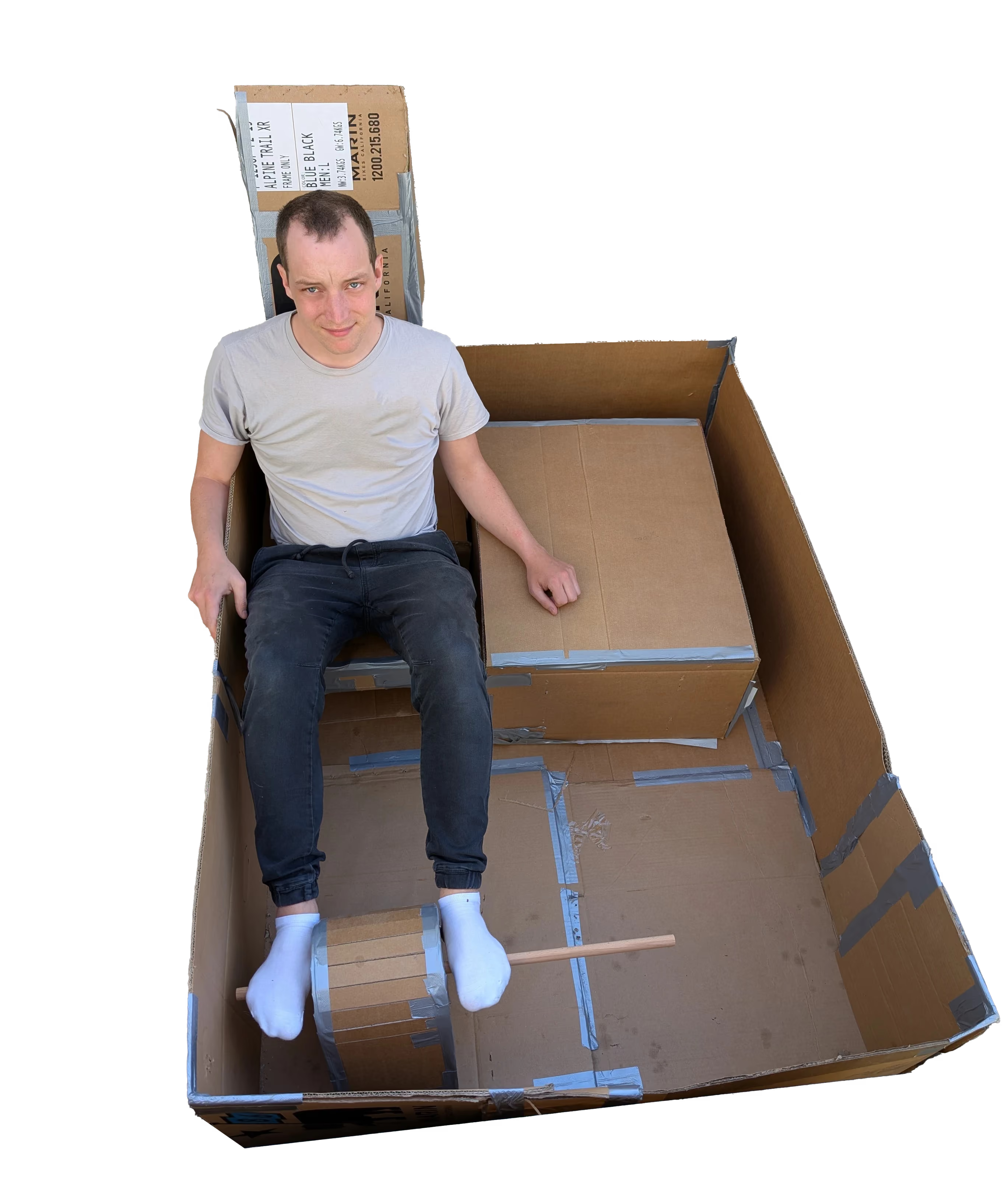
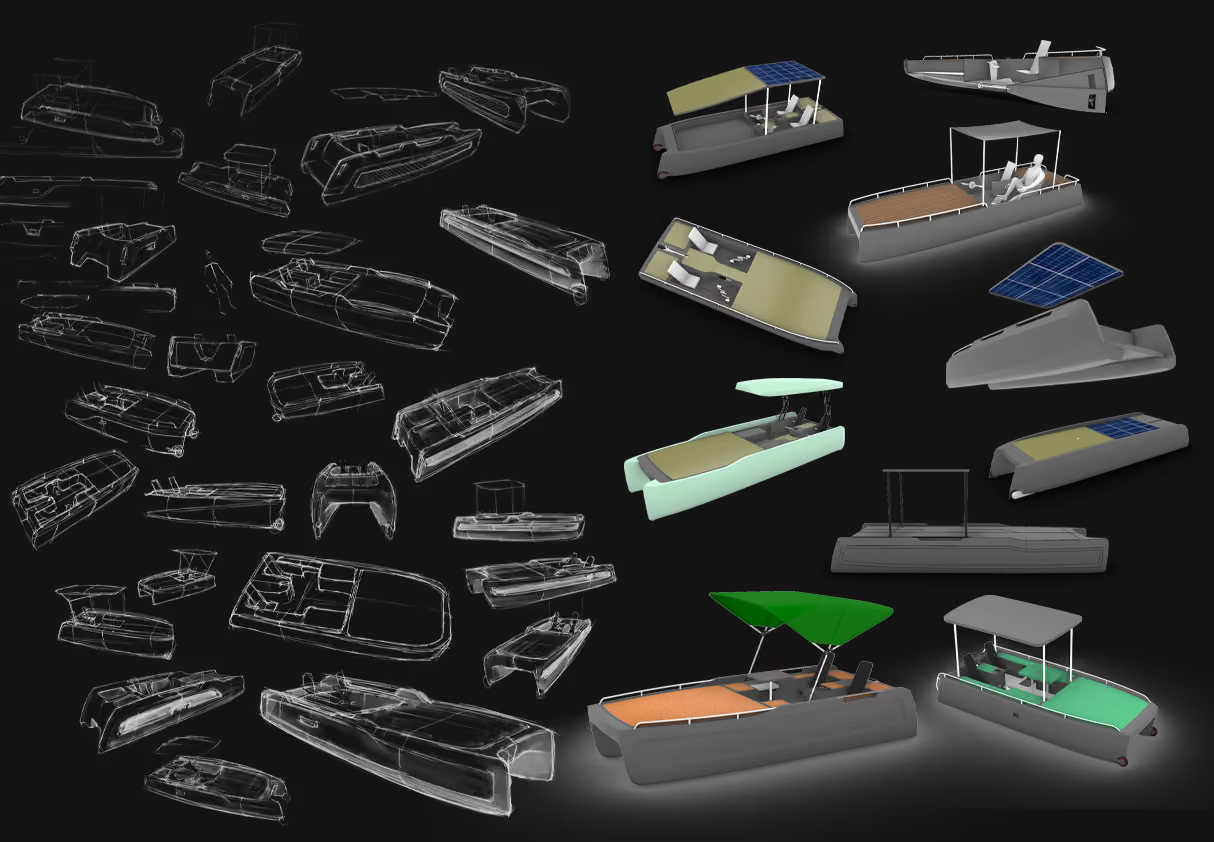
Early exploration moved through multiple typologies, proportions, and spatial arrangements, from rough sketches to cardboard mock-ups and CAD studies. This phase helped define the balance between compact dimensions, onboard comfort, and clear functional zoning.

Kilian sitting in a 1:1 cardboard mock-up of the cockpit

cardboard mock-up

Cloud of concept sketches and CAD typology studies

requirements

1

beginner-friendly

no prior experience required, intuitive
operation, a reassuring sense of safety
2

guided autonomy

minimal organizational effort, analog immersion, freedom

3

environmental compatibility

quiet propulsion and limited speed, knowledge transfer

4

physical interaction

active participation without becoming too demanding

5

robust construction

a robust hull with shallow draft

6

local value creation

involvement of local businesses to support the local value creation

THE BRAND

FLUVIA

Fluvia is a brand for slow, sustainable river journeys with minimal screen time and a strong focus on nature experience. It combines digital detox, local tourism, and environmental awareness in one clear concept.

business model

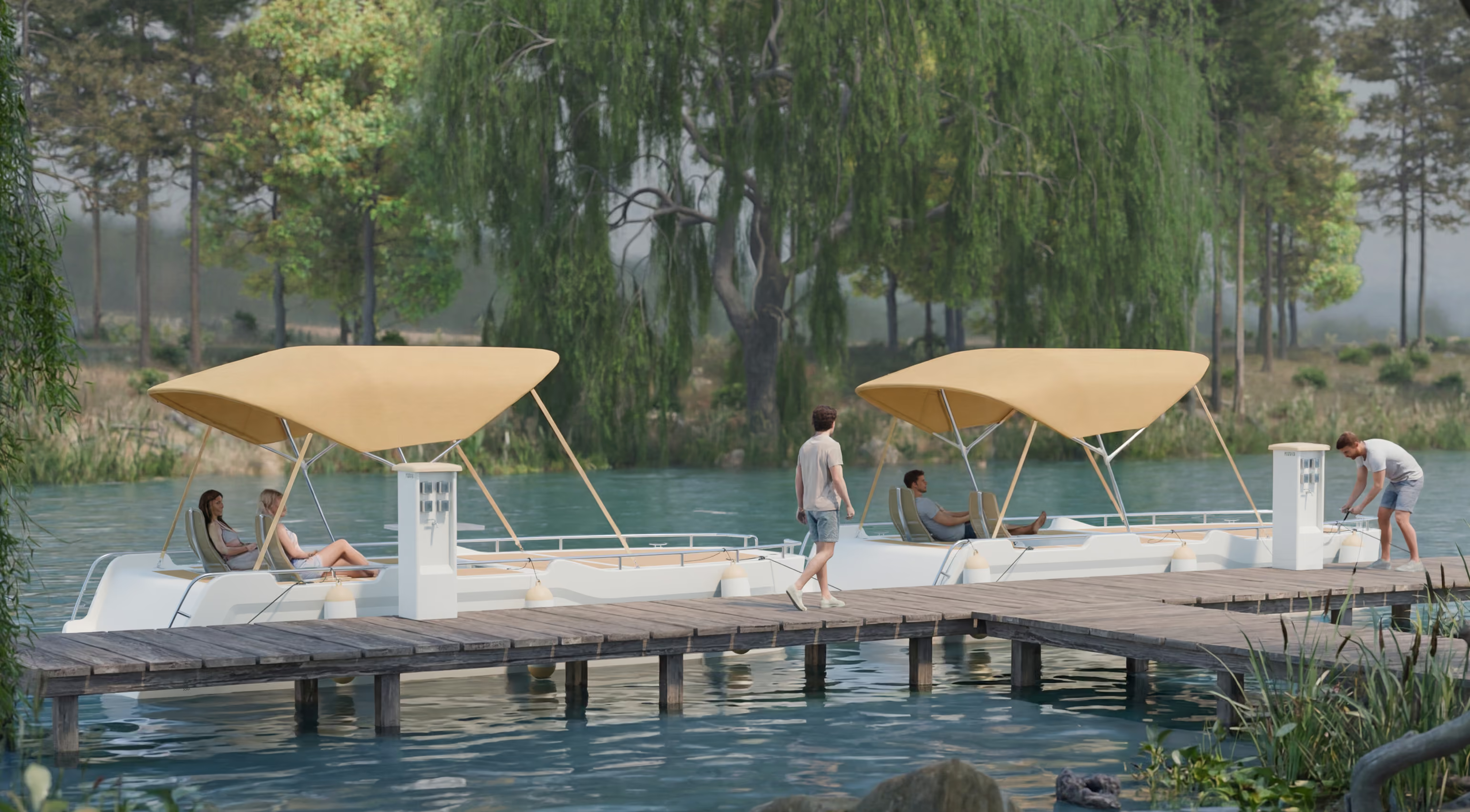
Fluvia works with local campsites, cities, or other riverside operators with a dock. These partners provide access to the river, while Fluvia supplies the boats and trains the local staff for handover and briefing. Guests book through the Fluvia website or directly with the rental partner, and the boat is returned through the local partner after the trip.

brand keywords

Digital detox, Nature experience, sustainable travel, local partner network, physical river map, young couples and friends.

rental station

A Fluvia rental station on a wooden dock, with the fluvia wordmark

lat. „fluvius“ - the river

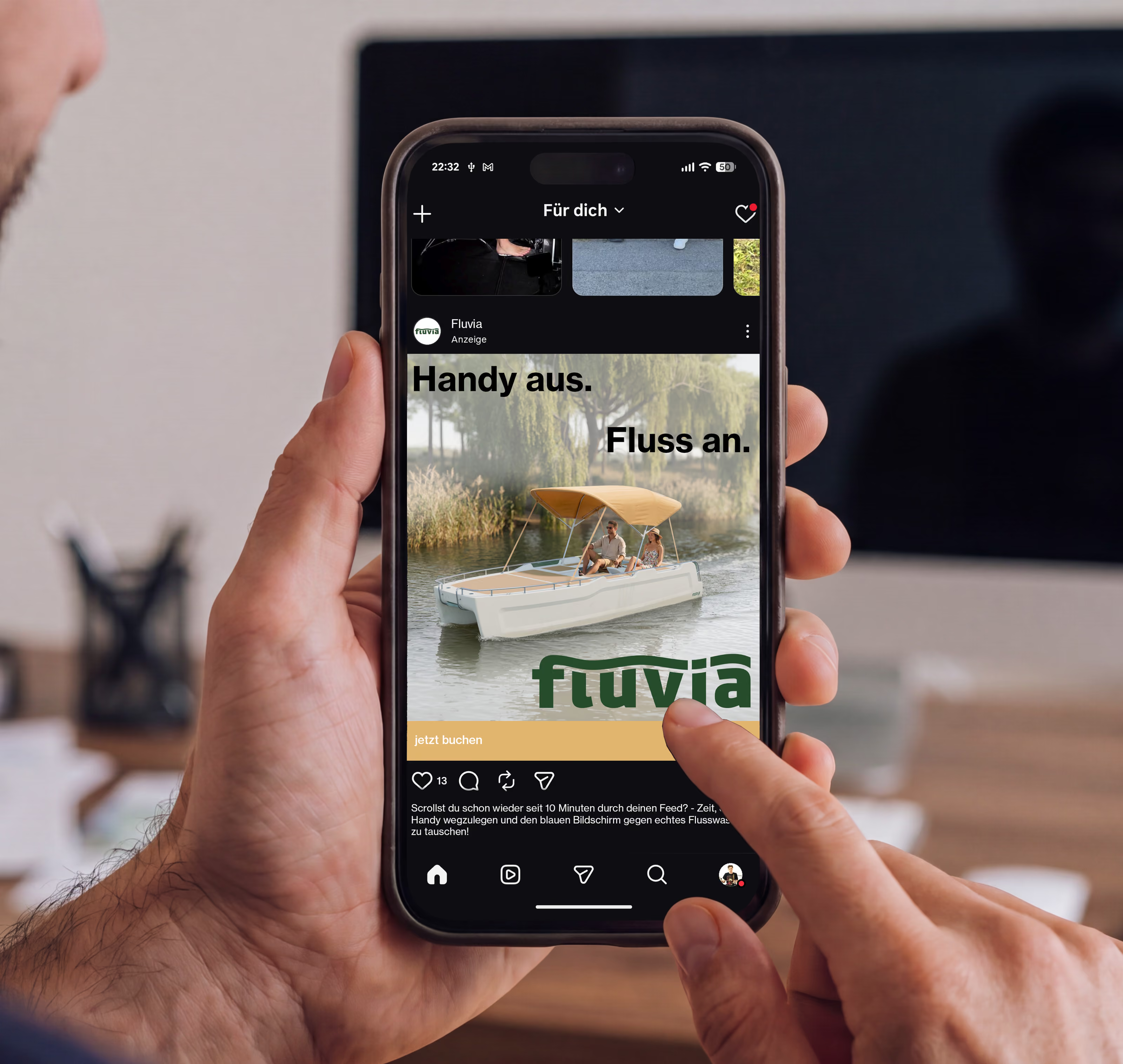
The Fluvia campaign interrupting a social media feed on a phone

colors

eggshell

HEX: F1EAD8

pale oak

HEX: CEC1AF

dusty olive

HEX: 6F8066

light blue

HEX: 9BBCC6

sunlight clay

HEX: E1B56E
FINAL DESIGN

FEATURES

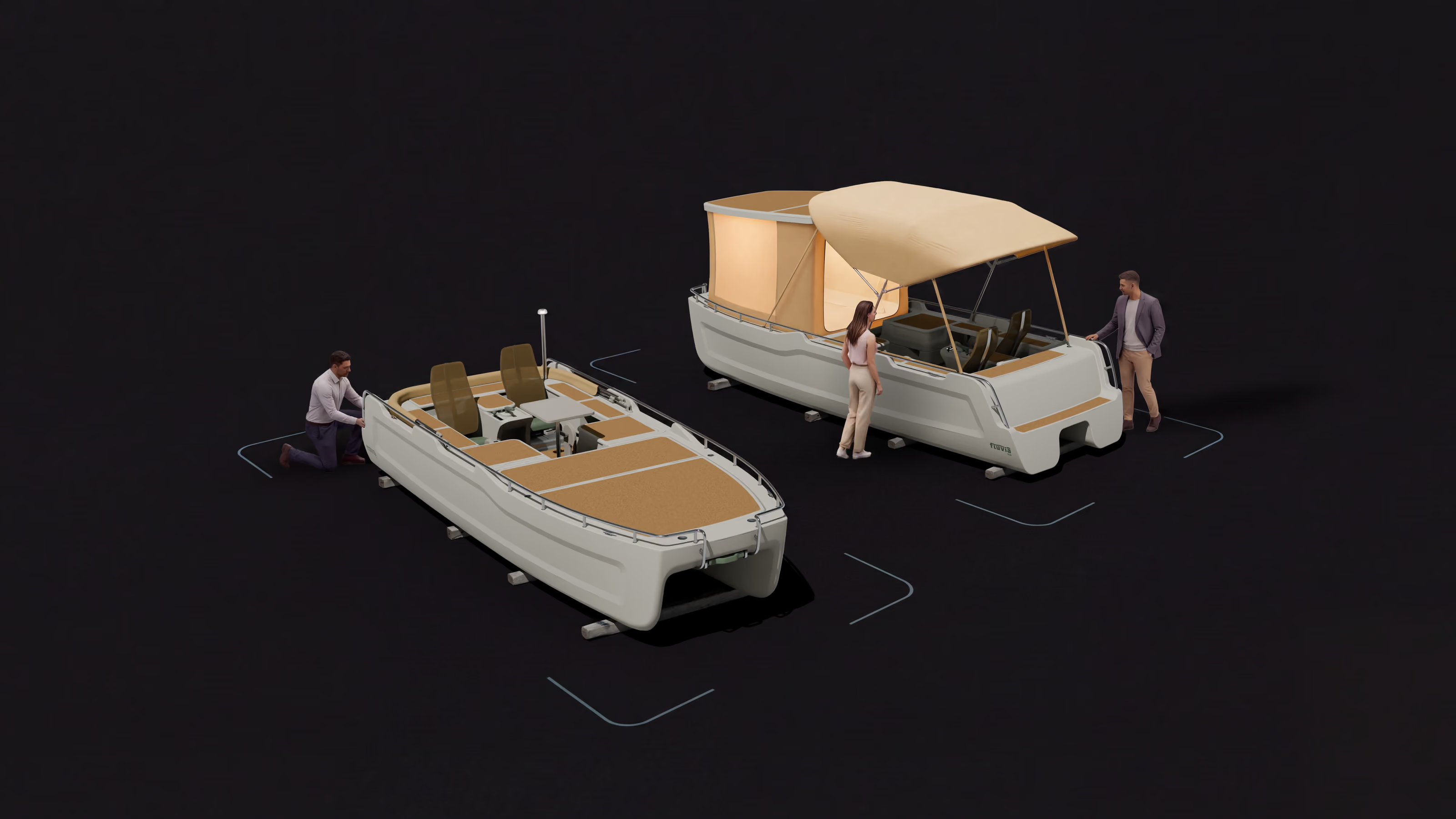
The Fluvia 550 in day configuration and with the tent-box set up for the night

controls

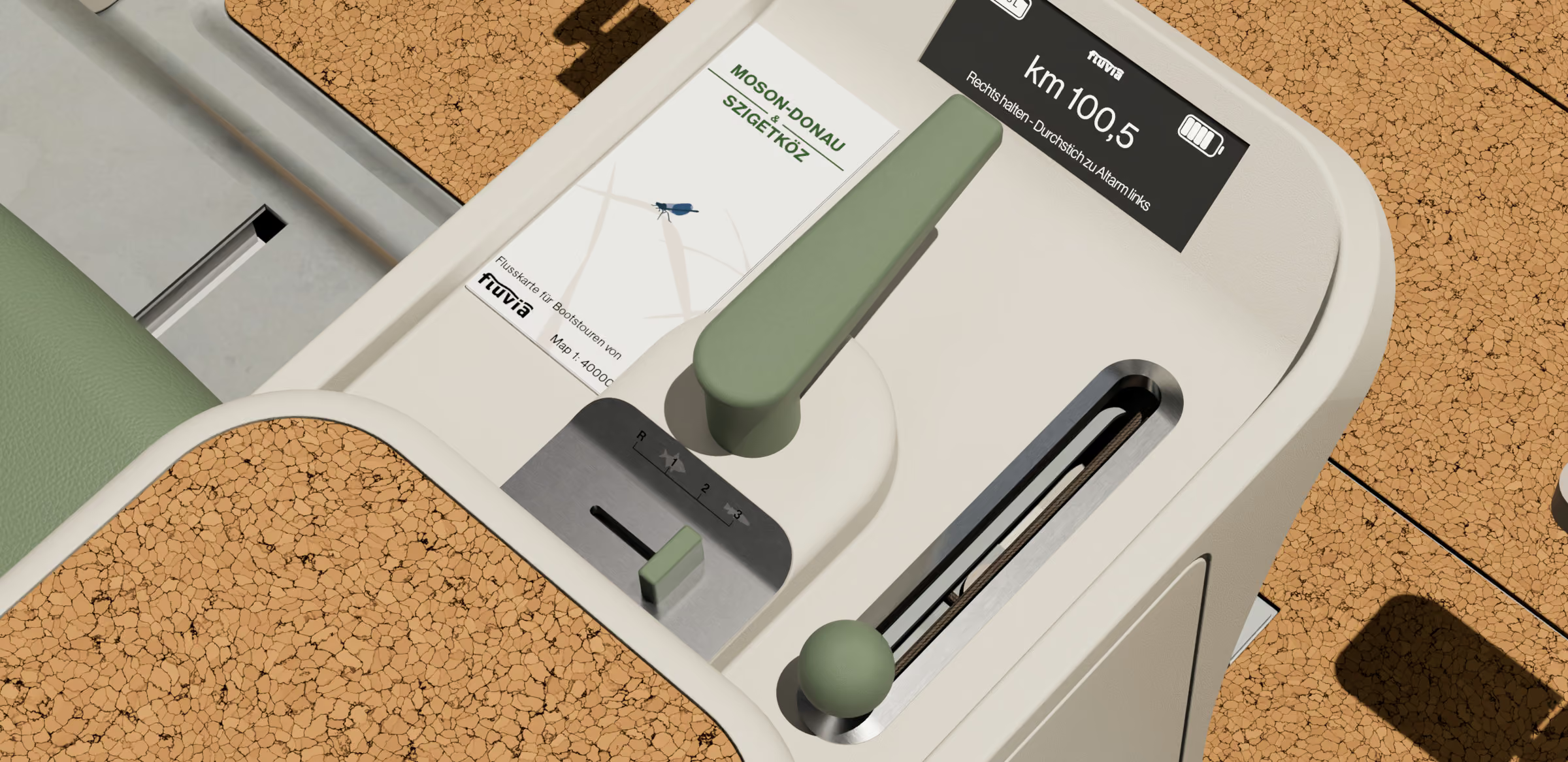
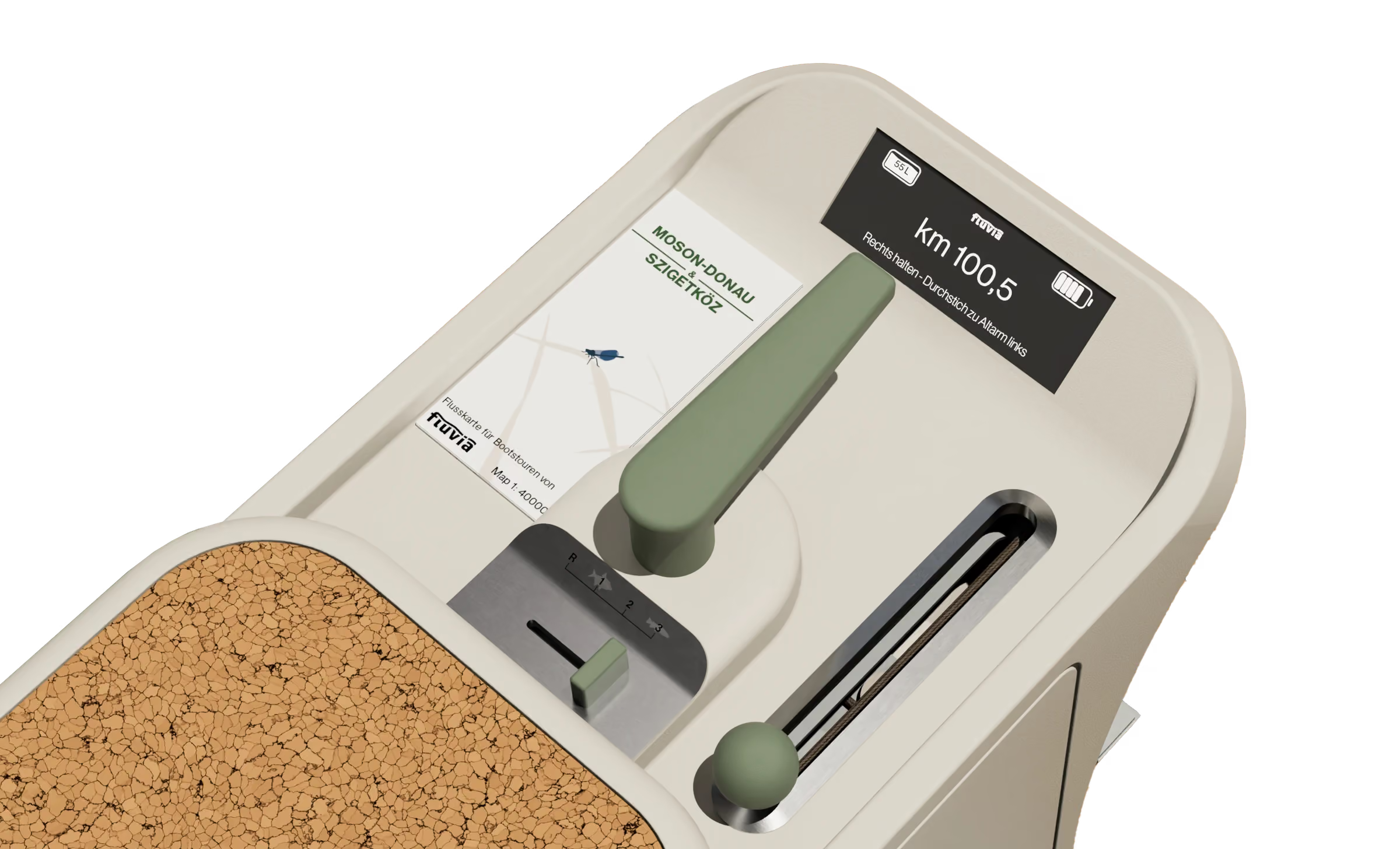
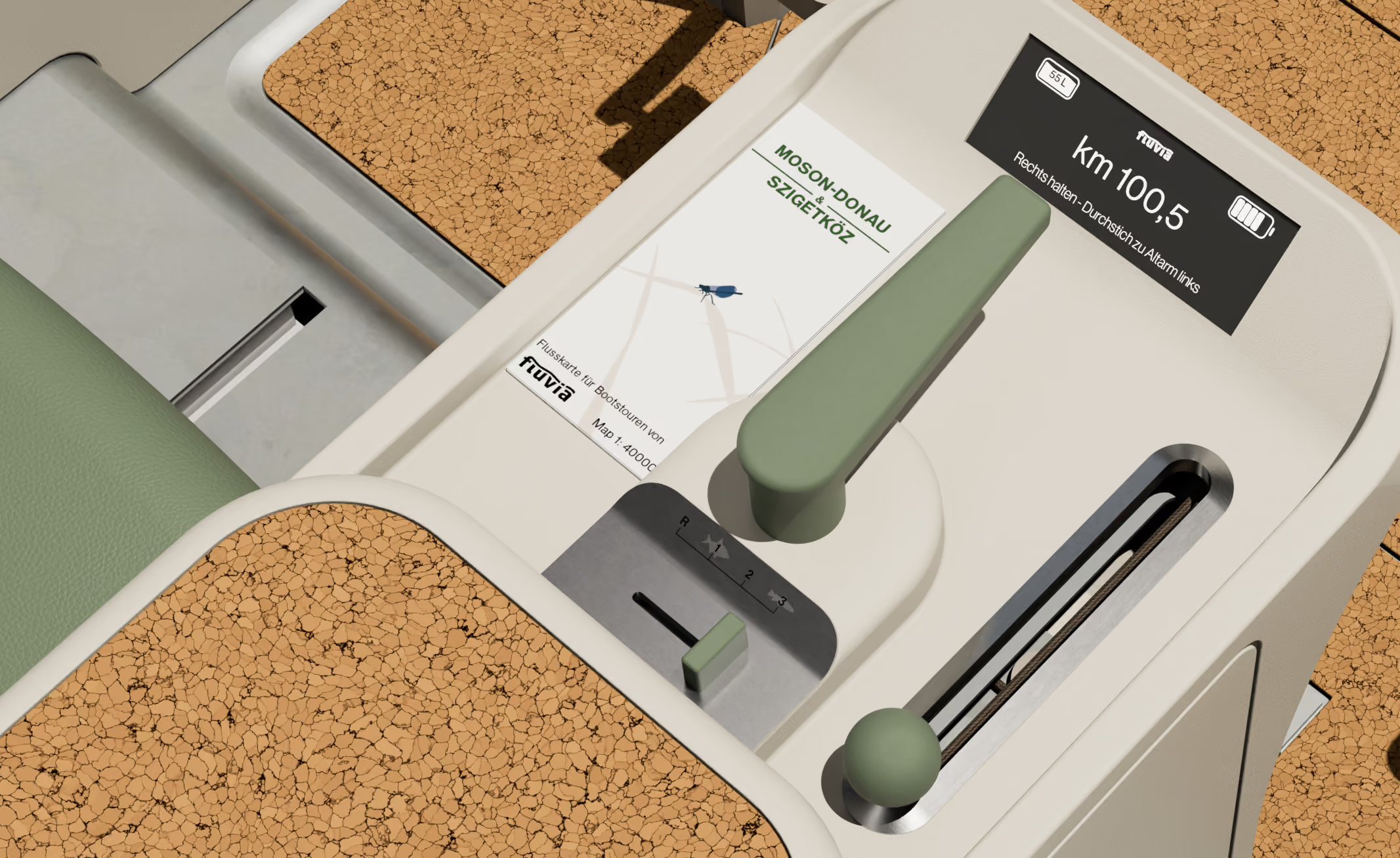
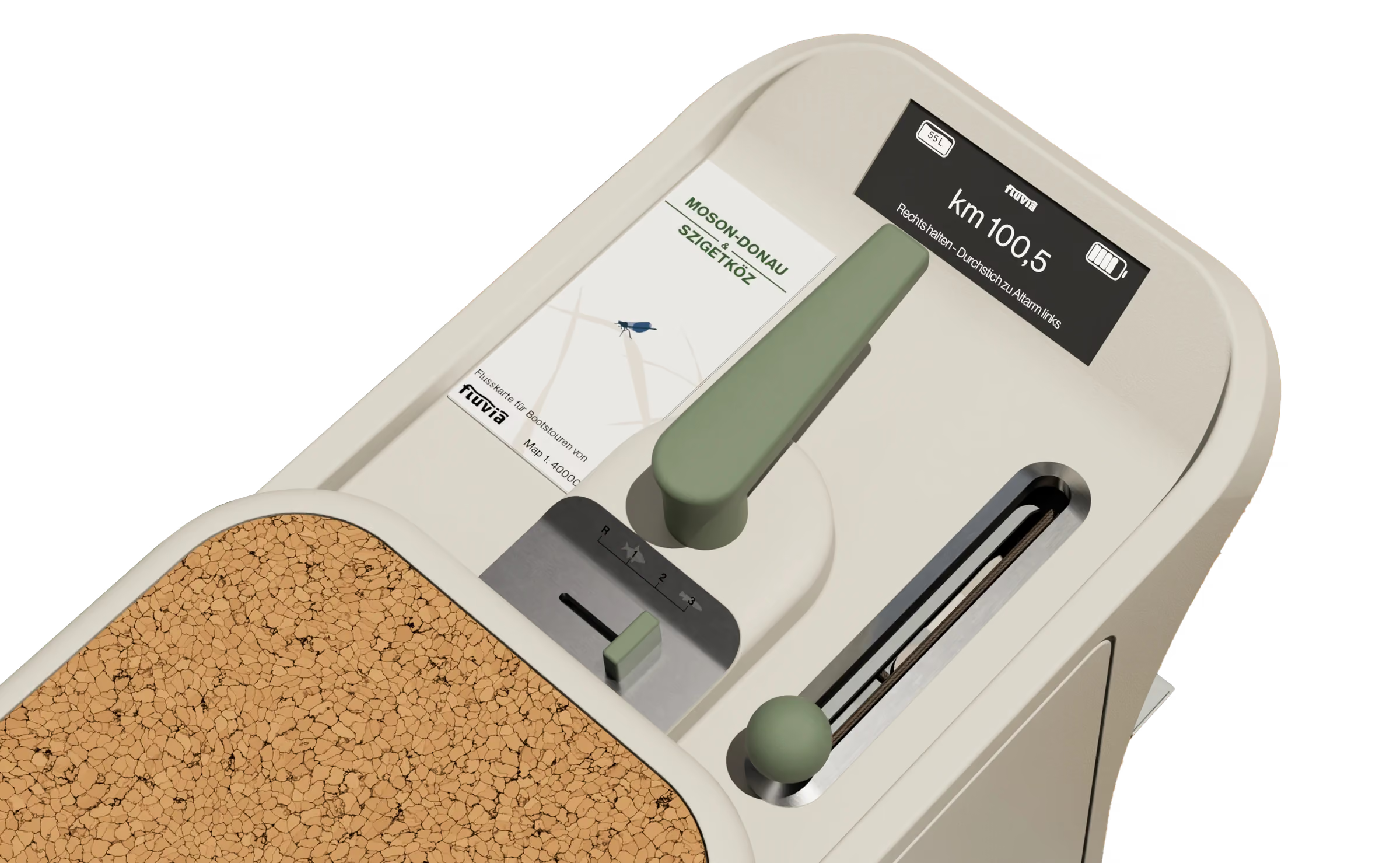
The controls: tiller, gear selector and the river map in its slot

eating area

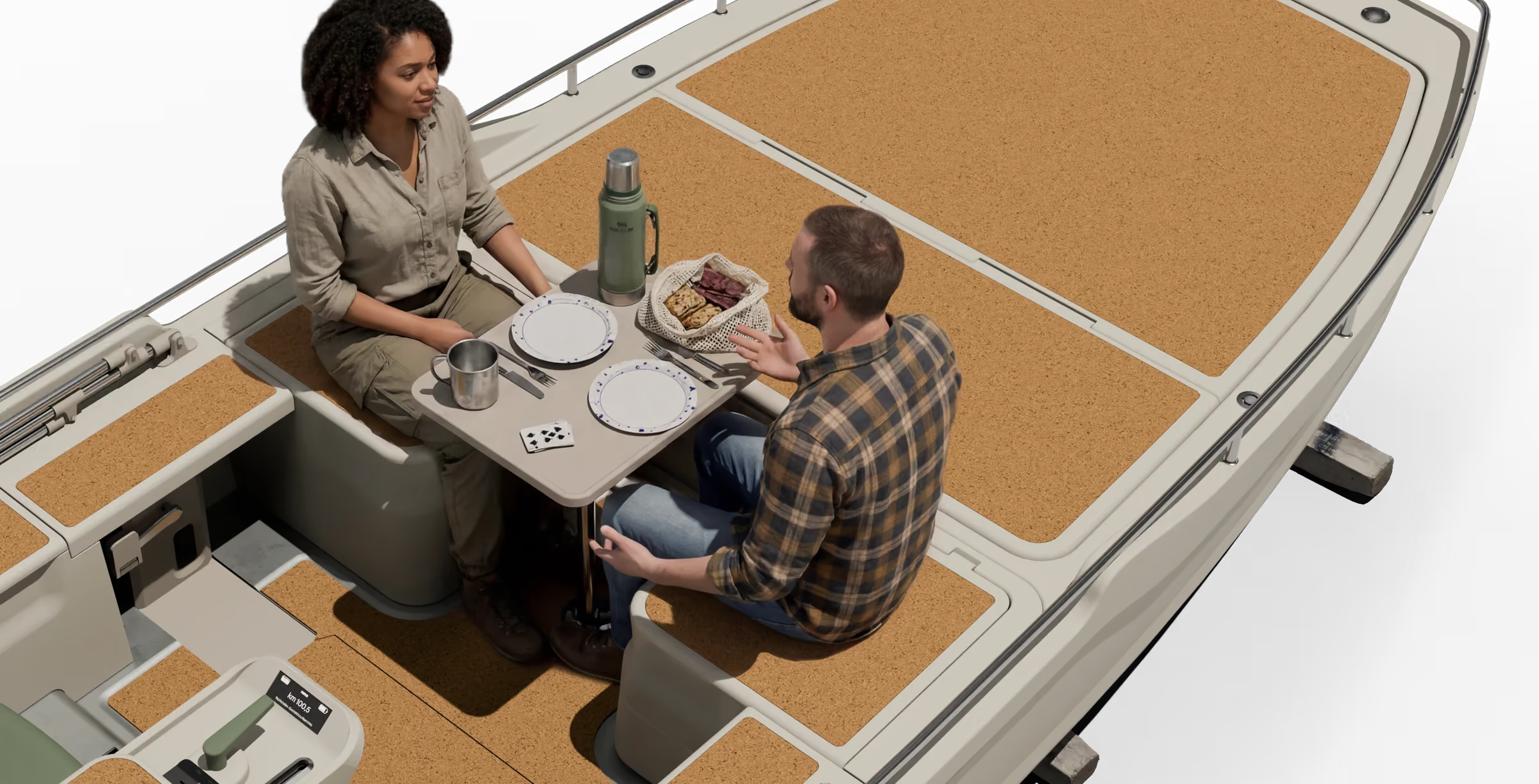
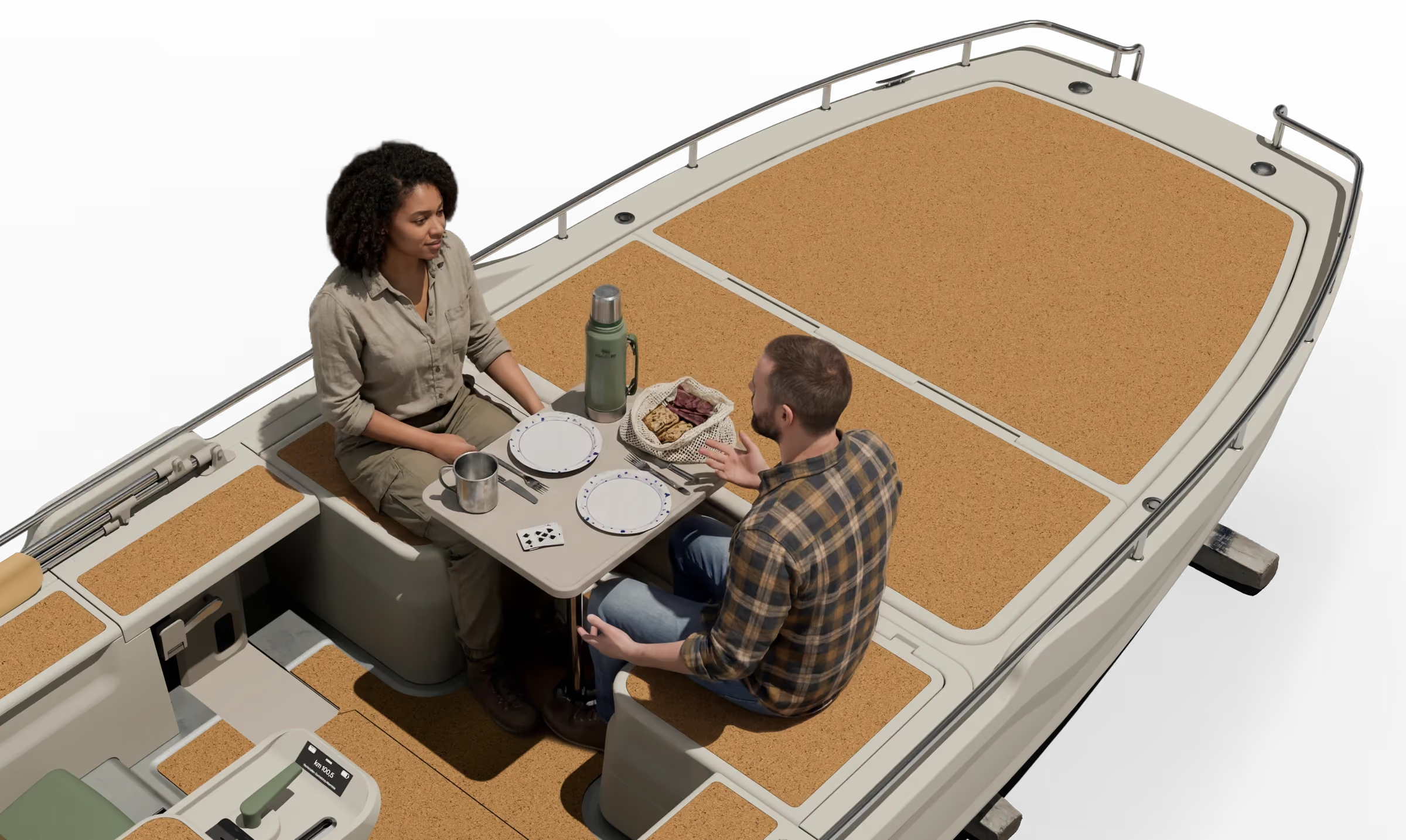
Two people eating at the table in the cockpit

storage

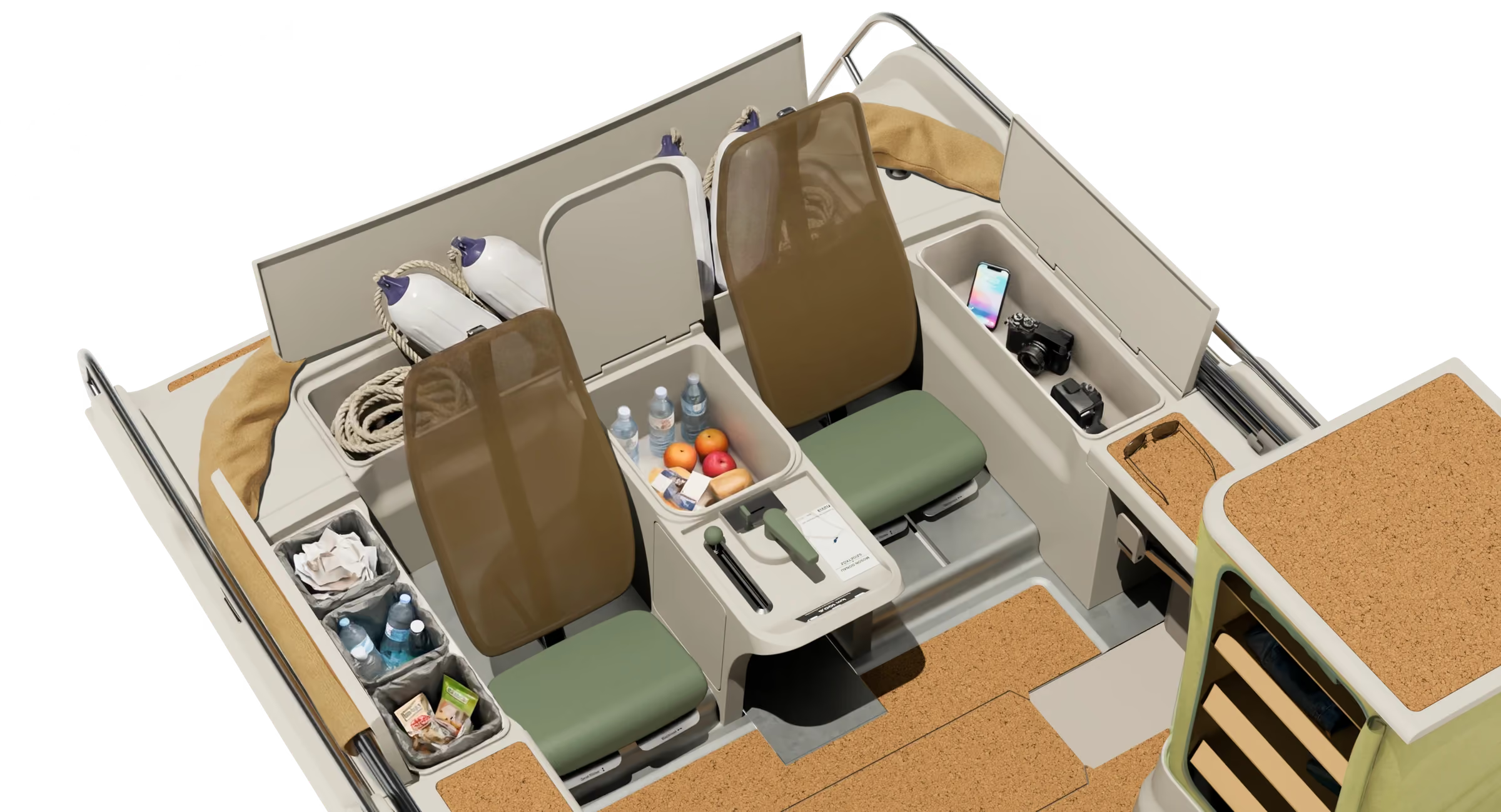
Storage under the seats

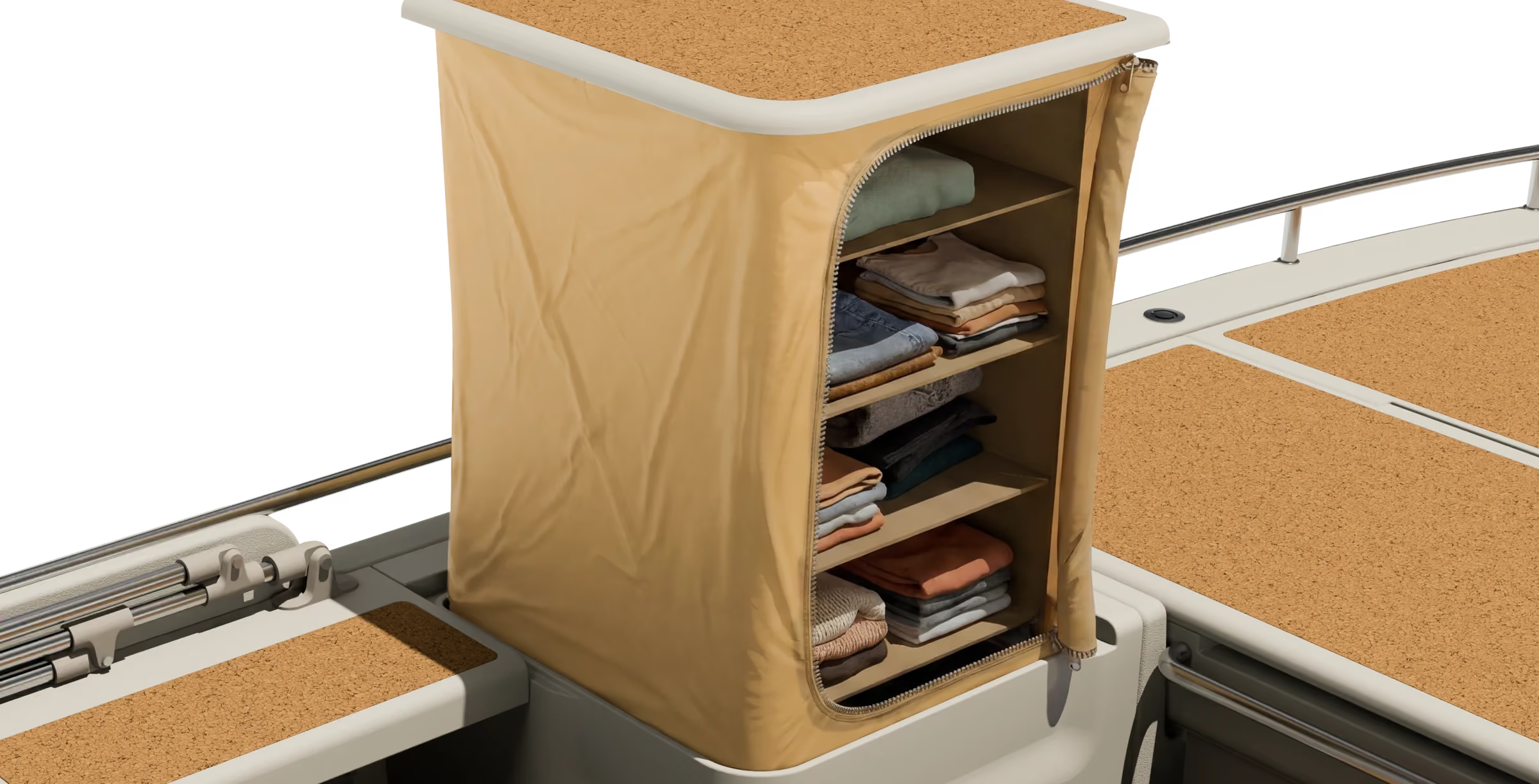
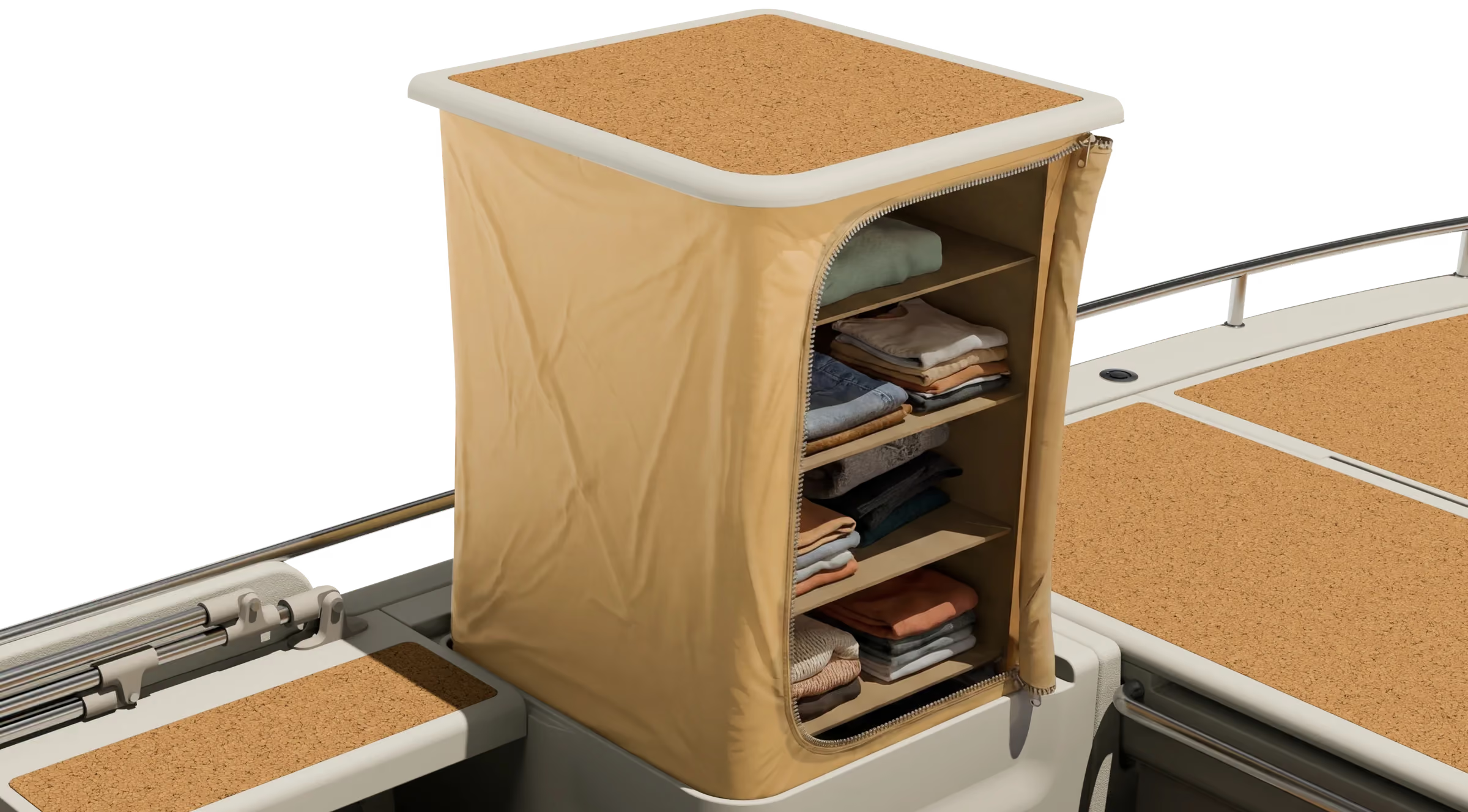
wardrobe

The wardrobe module

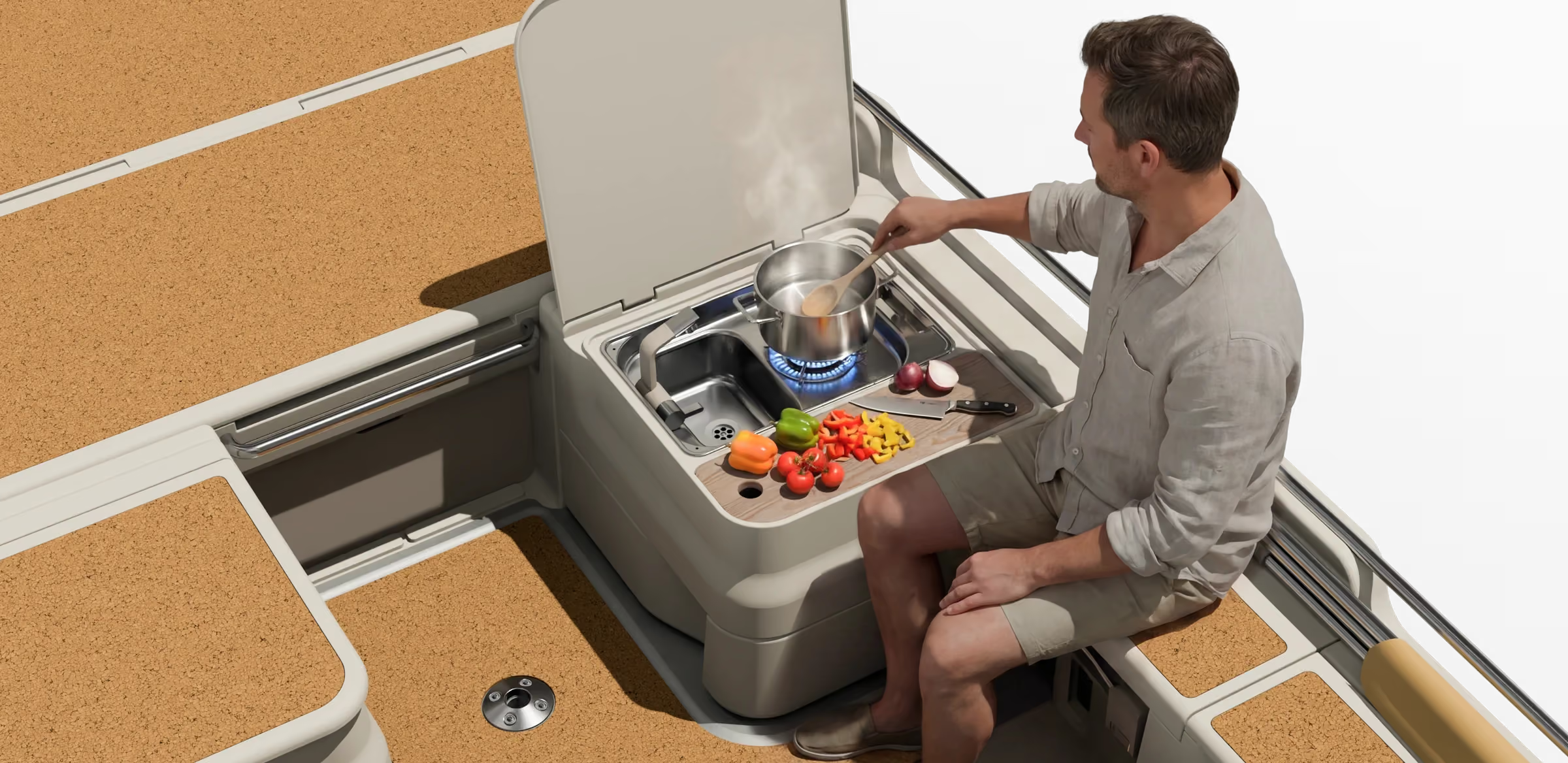
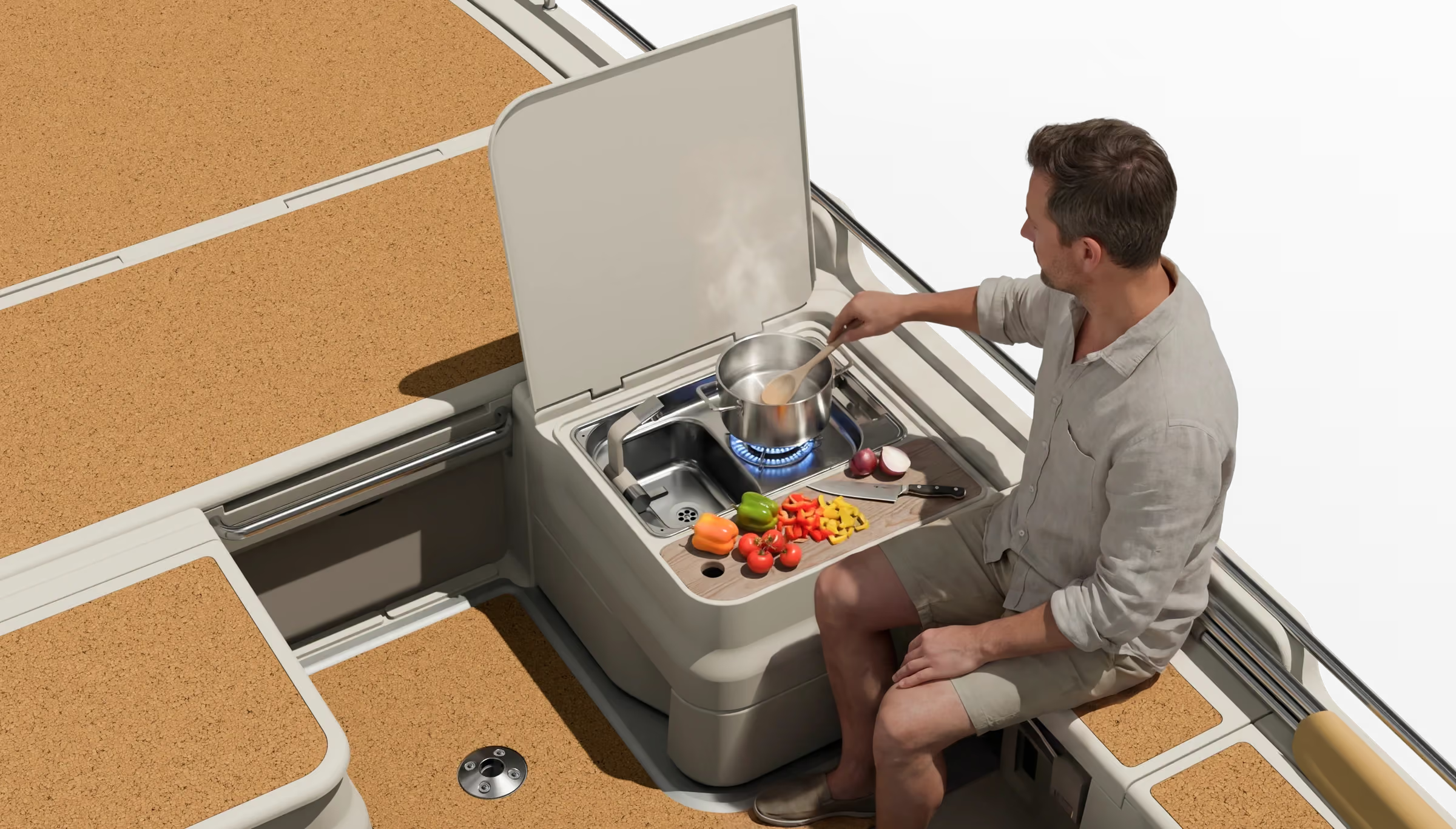
pantry

Cooking at the pantry module

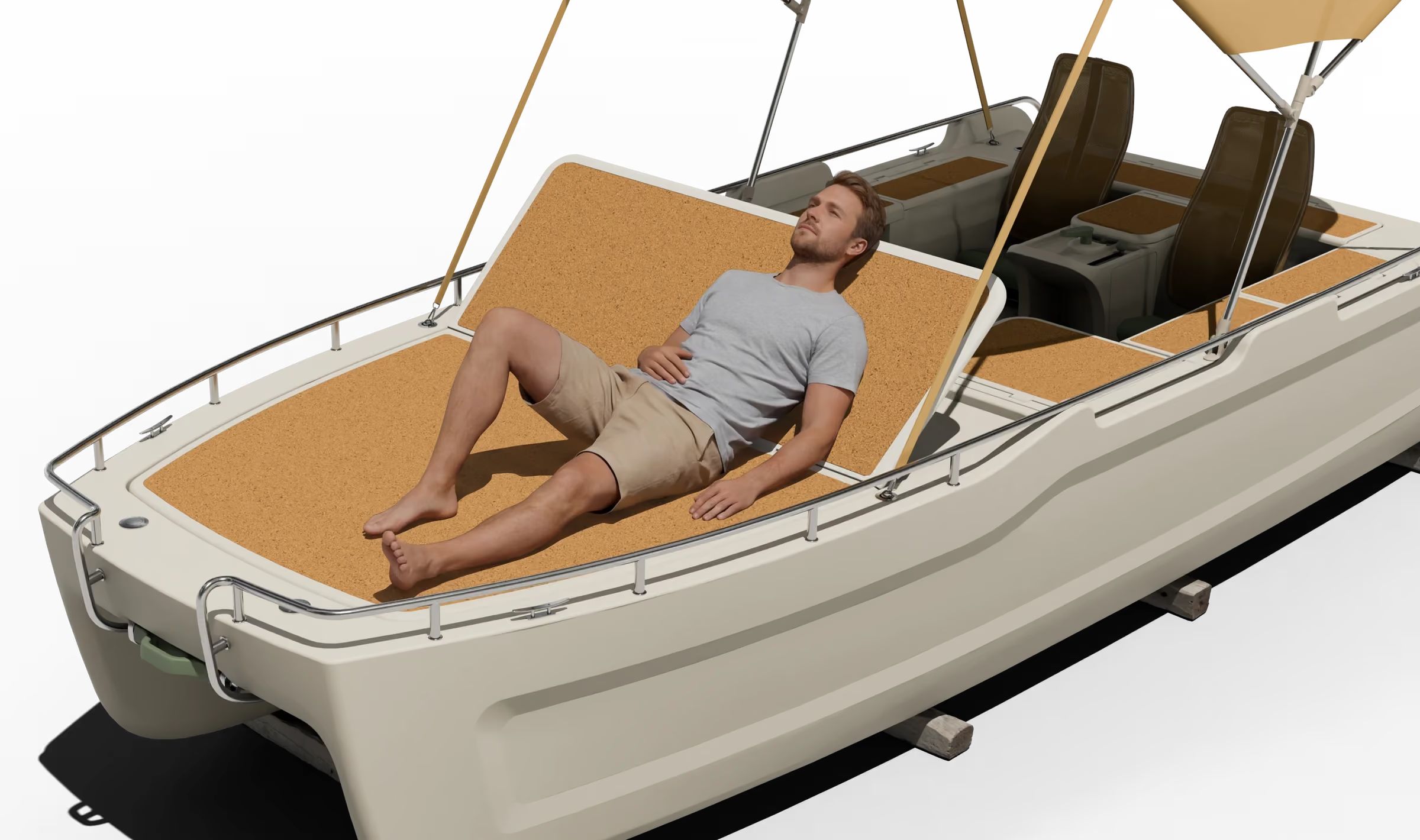
sun lounger

Lying on the sun lounger at the bow

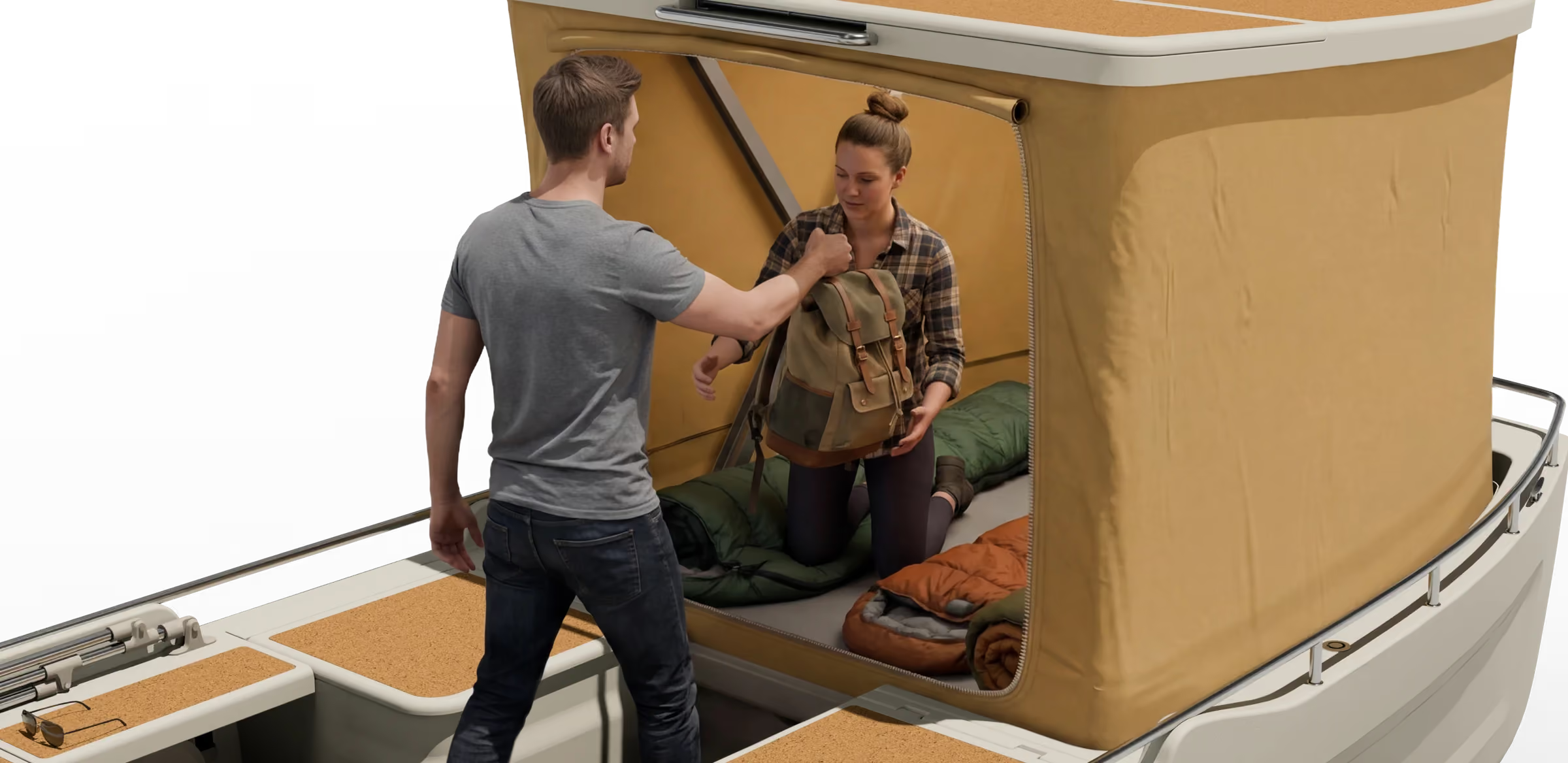
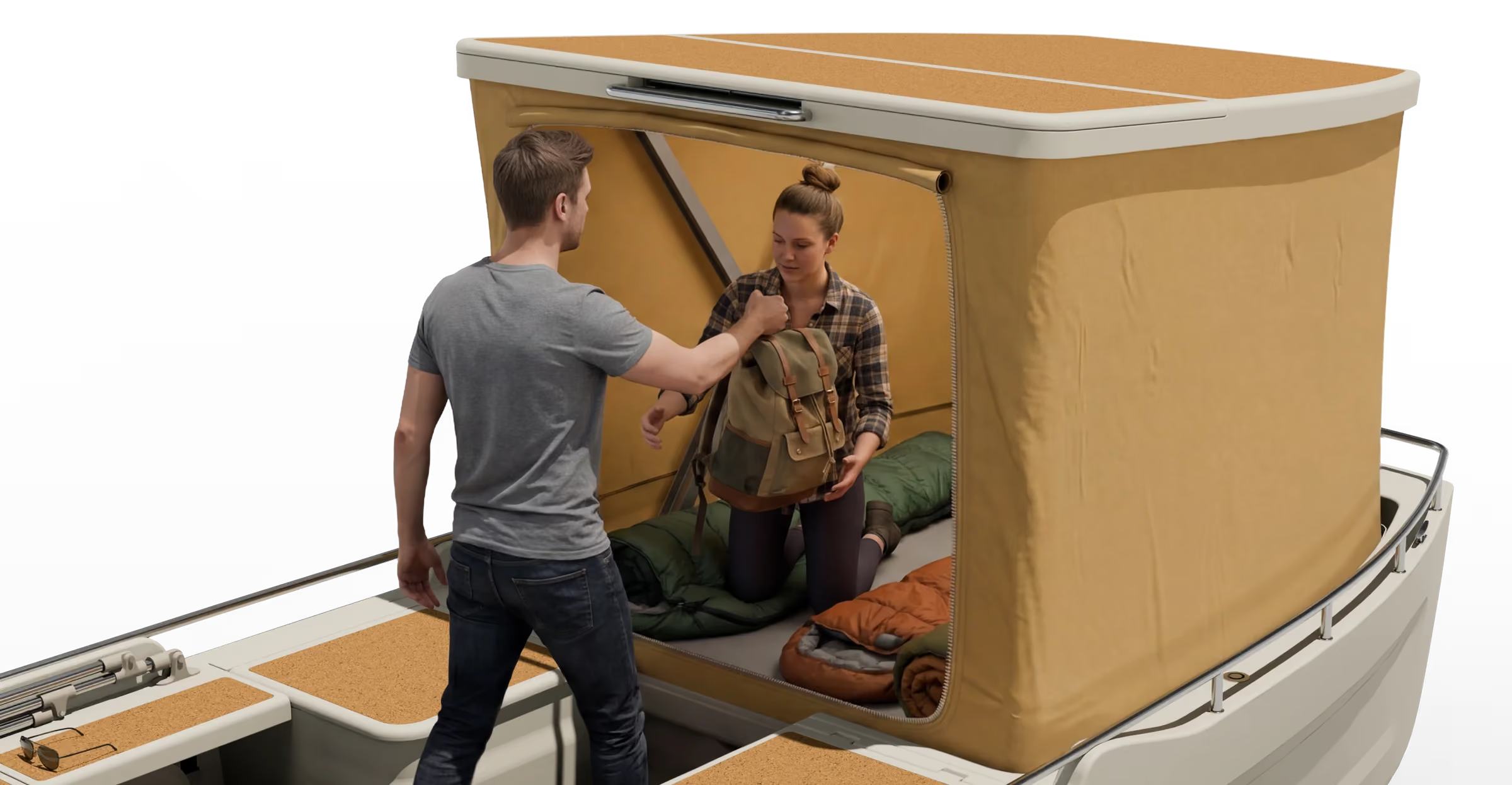
tent-box

Setting up the tent-box

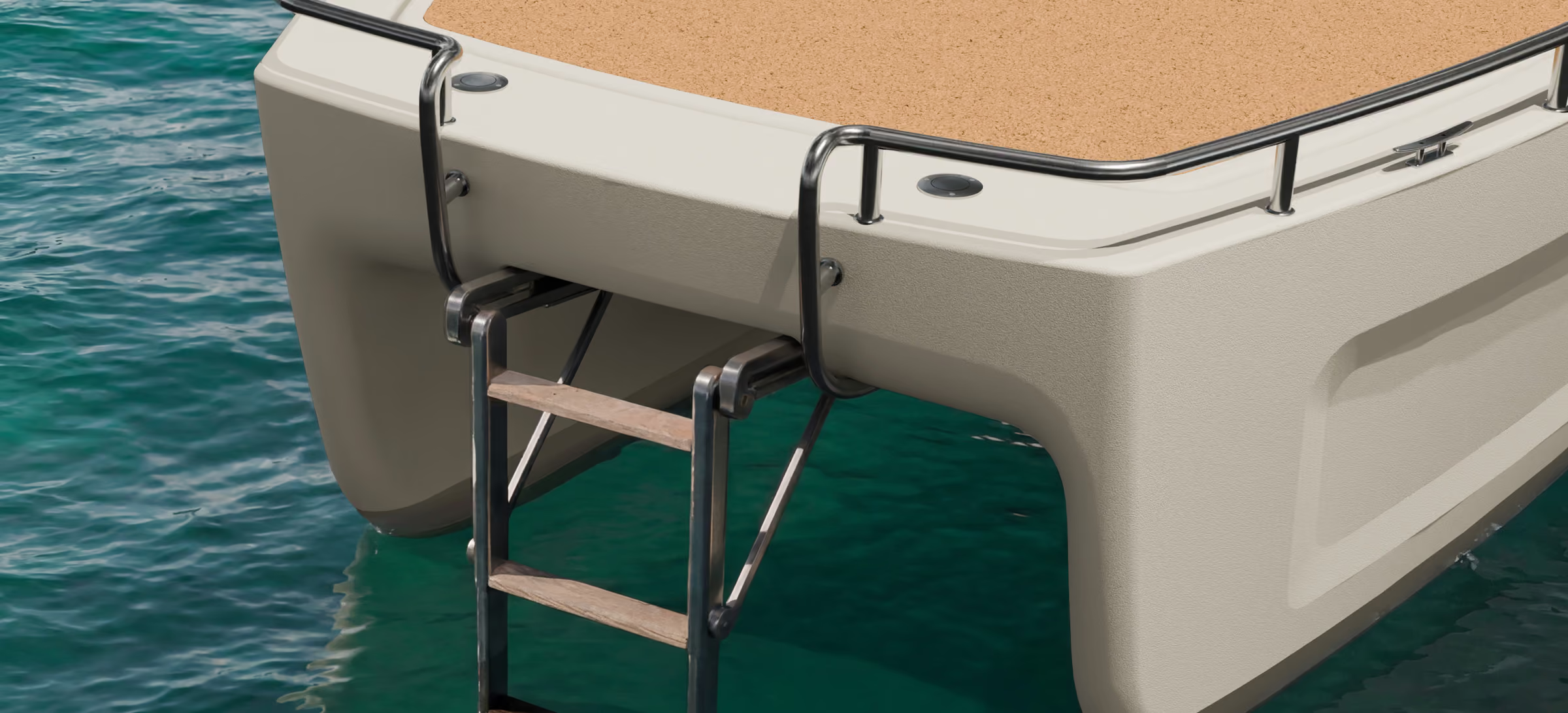
bathing ladder

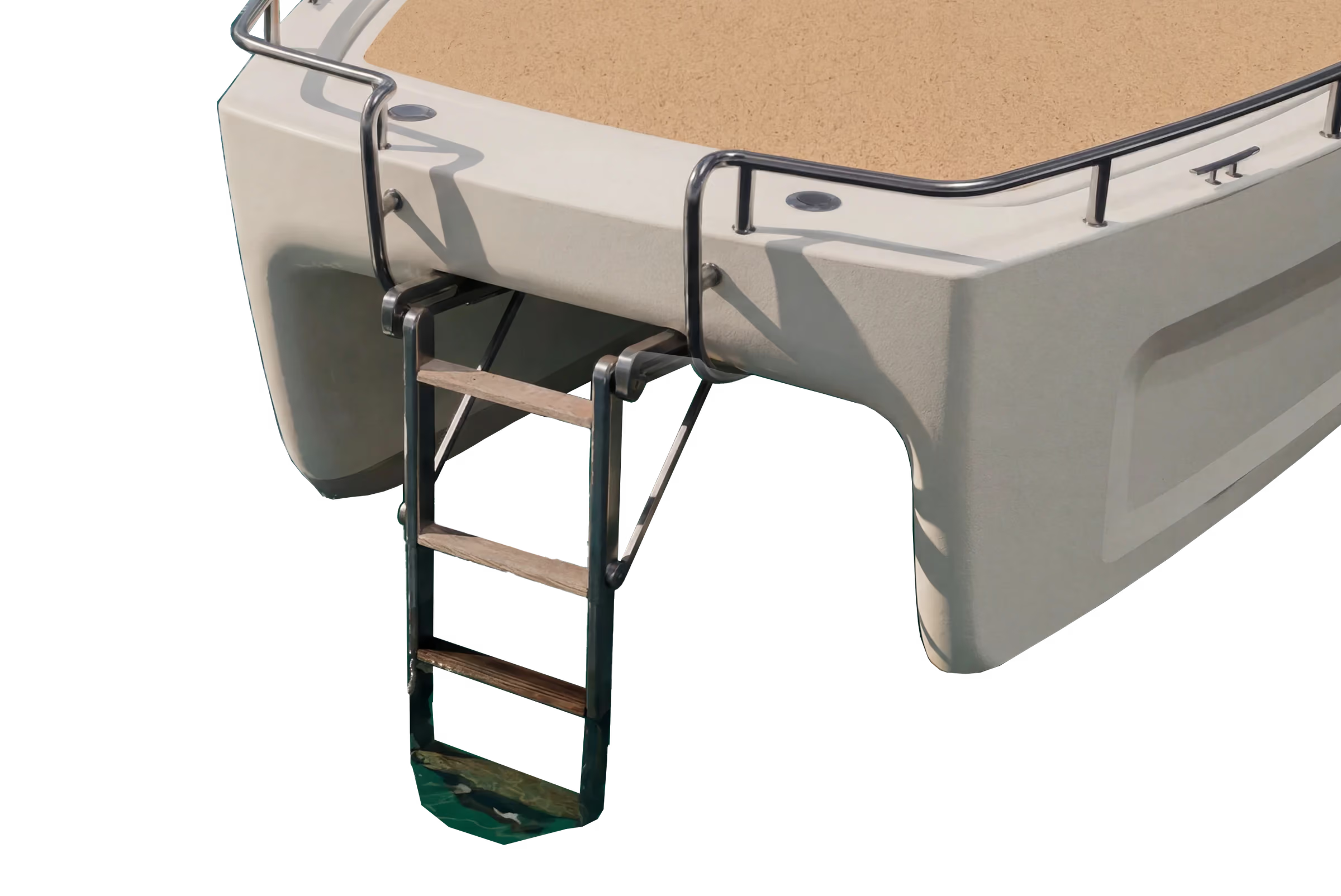
The bathing ladder folded out at the stern

STEERING AND NAVIGATION

CONTROLS AND MAP

controls

The boat is operated via a central control stick (tiller/helm lever) located on the mid-console. In addition to the steering control, the console integrates all essential controls and information displays within easy reach of the operator.

tiller
boat steering
retrieval lever
Operates the boat’s retrieval/hoisting mechanism
gear selector switch
3 forward gears + neutral + reverse
physical map slot
storage for the DIN A2 fold-out chart
display
navigation data
(river kilometer & small sentence)
system status
(battery level, water tank level)
The mid-console, annotated: tiller, physical map slot, gear selector switch, retrieval lever and display

display

tiller

physical map slot

gear selector switch

retrieval lever
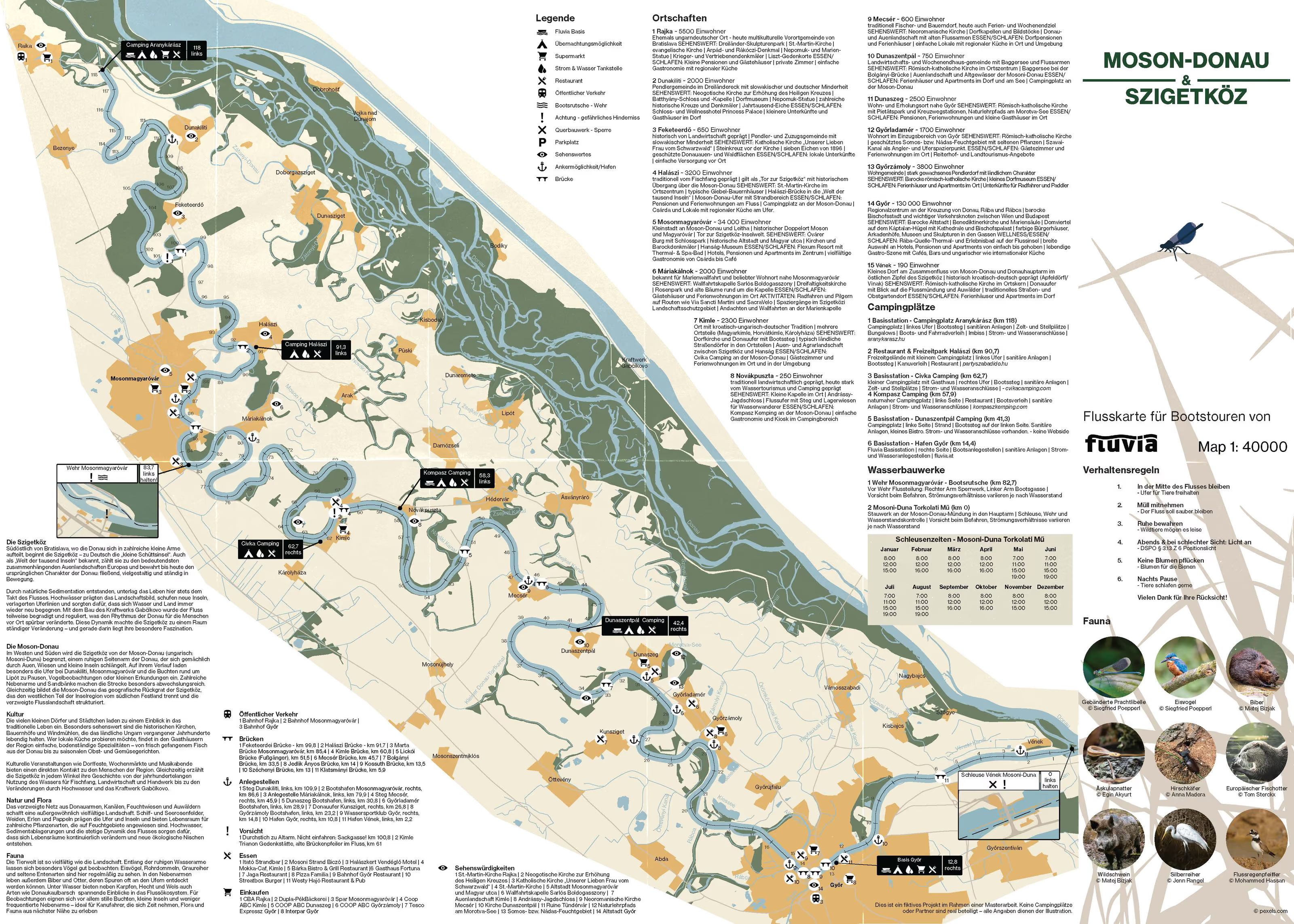
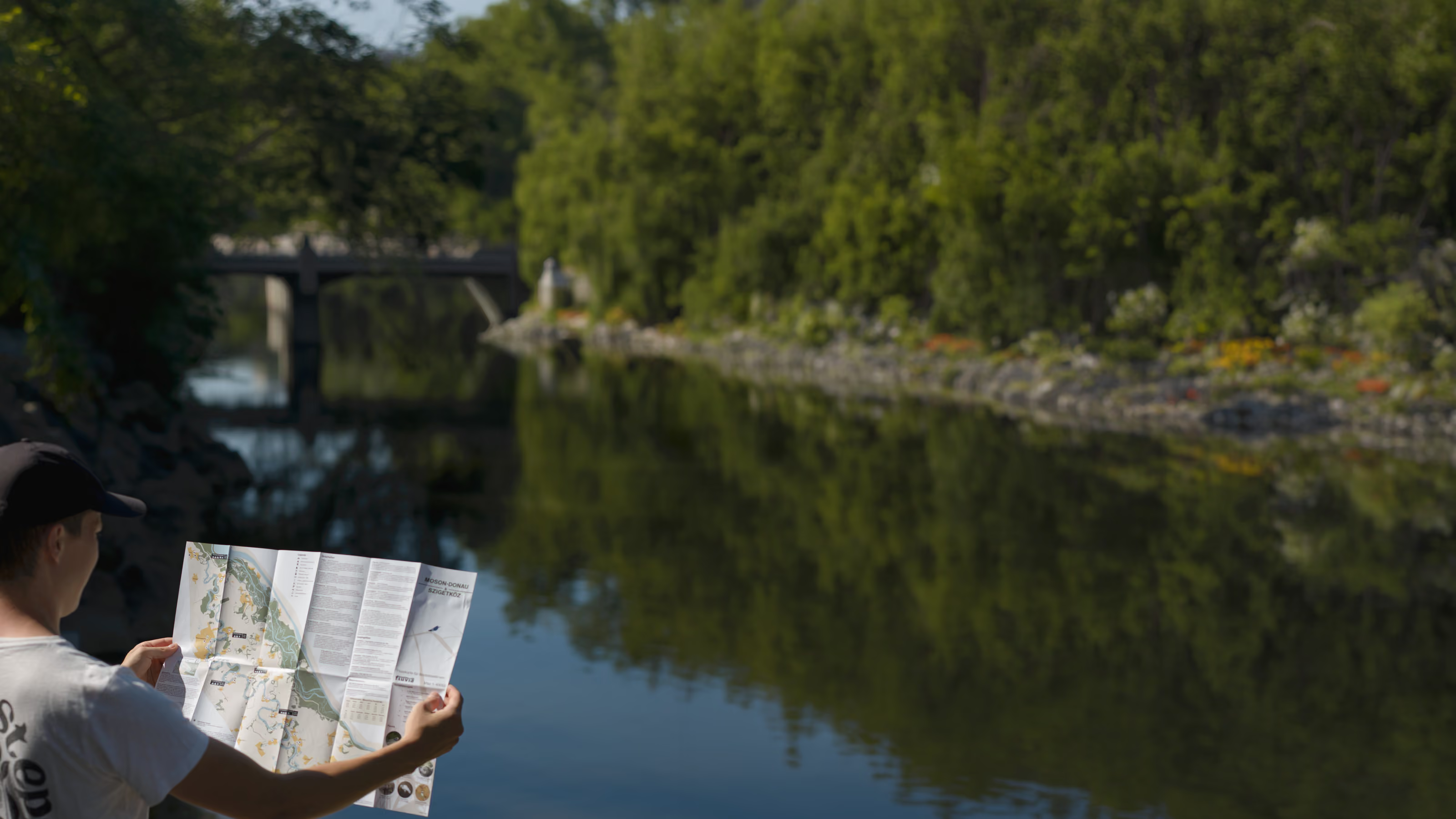
The DIN A2 Fluvia river map of the Moson-Donau and Szigetköz region, 1:40000

navigation concept

To deliberately avoid reliance on smartphones or digital apps, navigation is based on a physical DIN A2 fold-out map. For this project, the „Moson Danube“ arm of the Danube River serves as the example target region.

river kilometers

The onboard display shows the current river kilometer (counted upstream from the mouth) and a brief contextual note. Users locate this on the map‘s river scale, enabling precise navigation without digital dependency.
NAVIGATION & ENVIRONMENTAL EDUCATION

MAP/POSTER

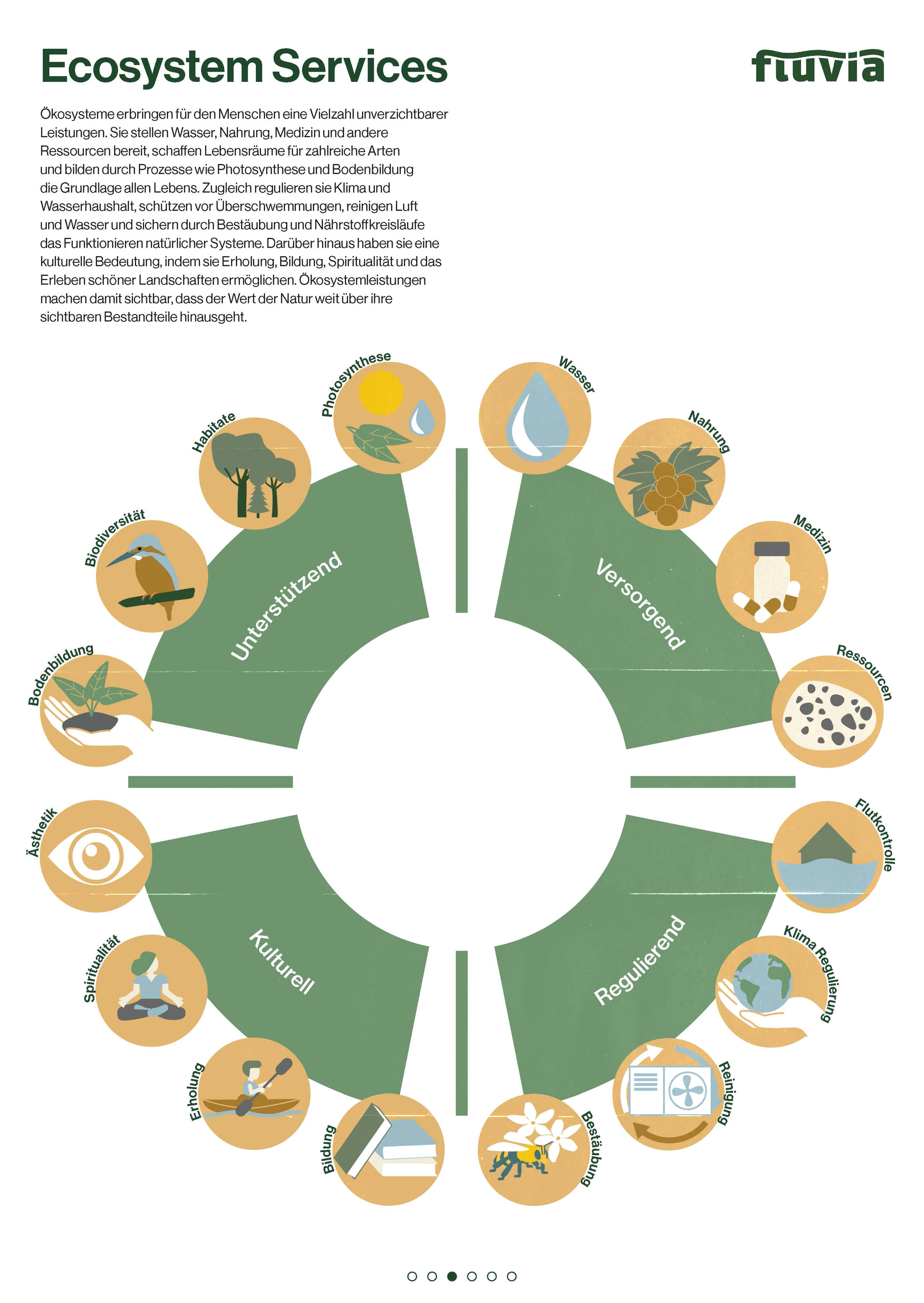
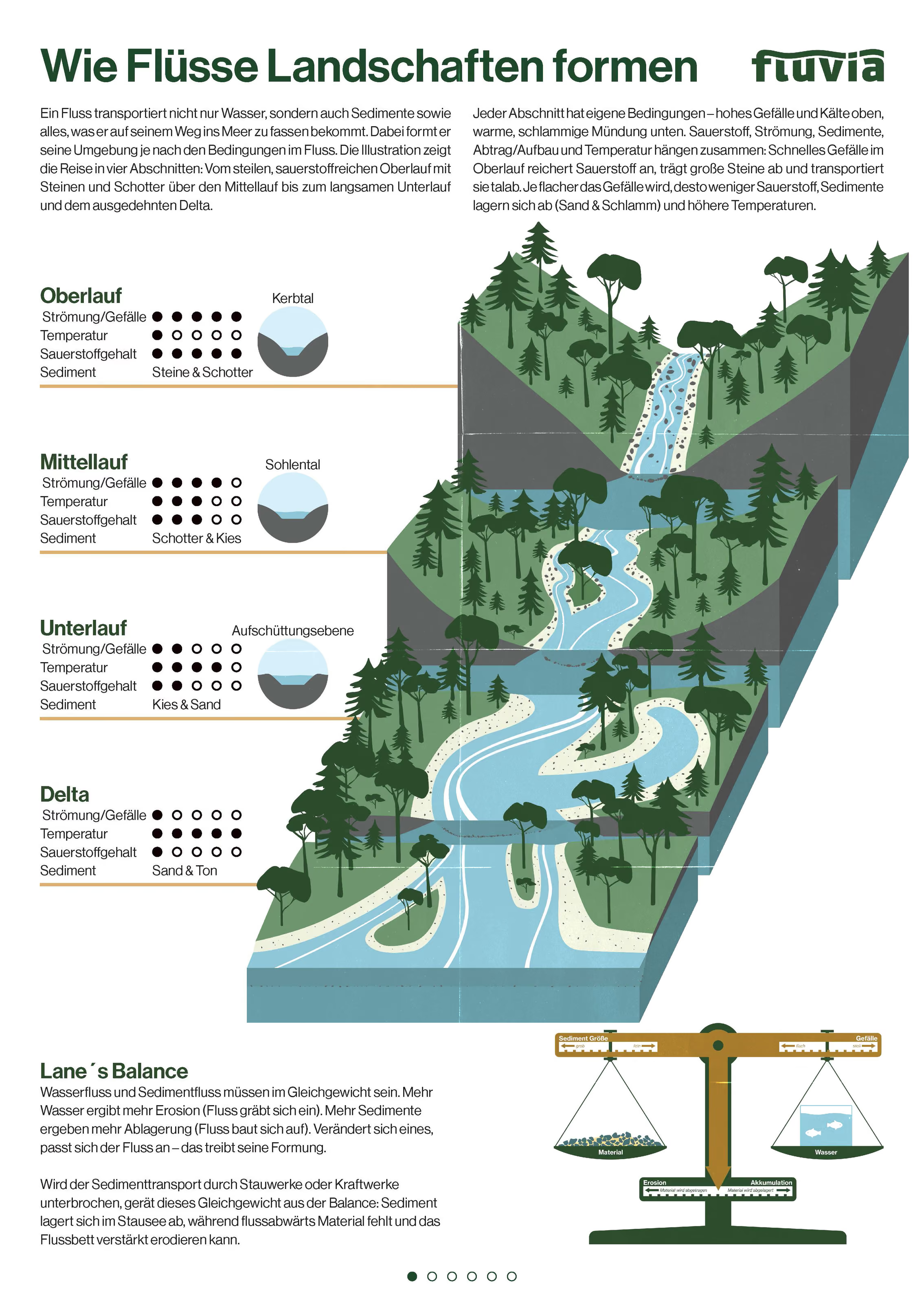
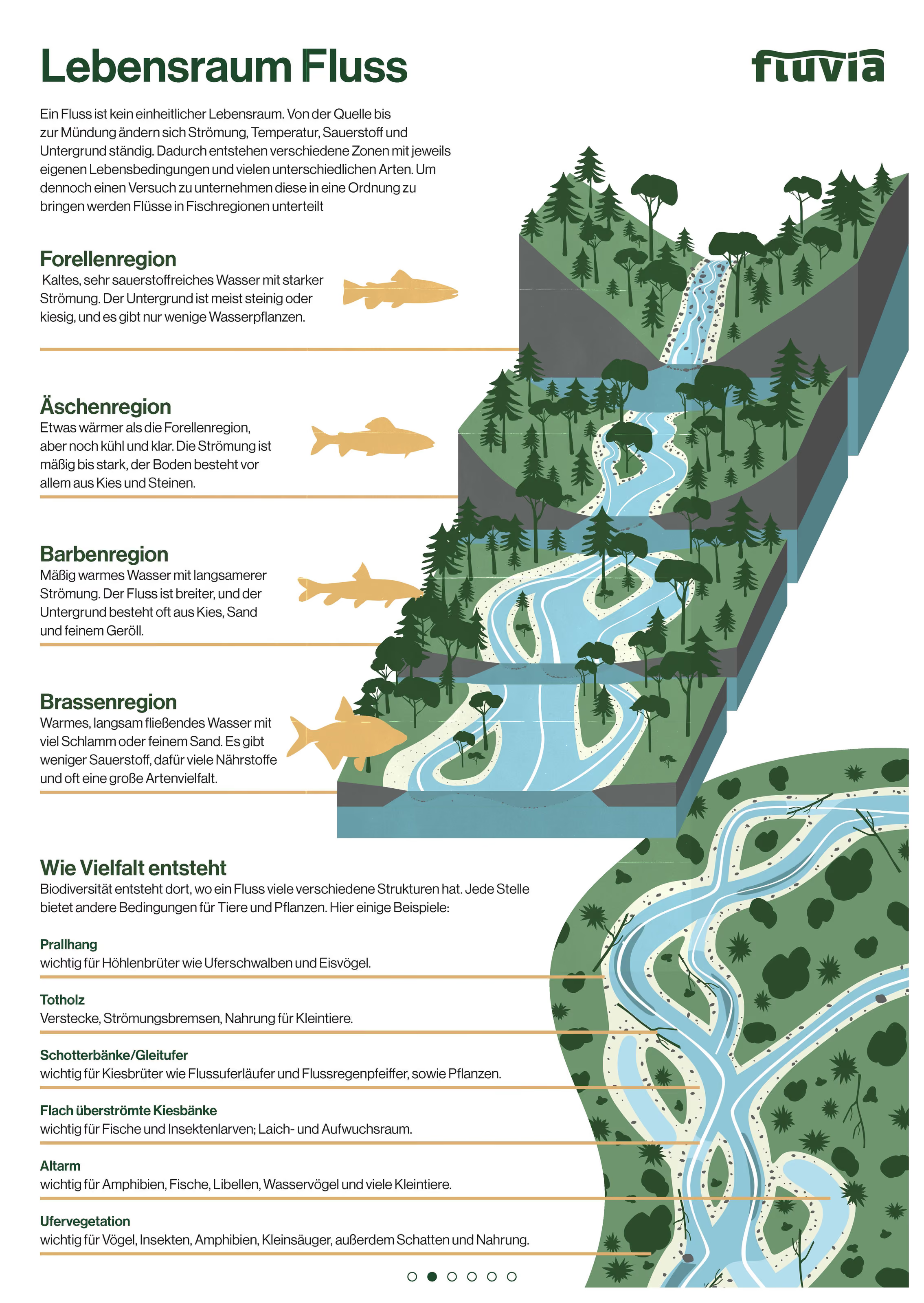
To spark personal interest, the reverse side of the river map features a series of posters on different fluvial topics. Three example themes were selected: (1) „How Rivers Shape Landscapes“ – morphology, sediment transport & Lane‘s Balance; (2) „River as Habitat“ – fish zones & how diversity emerges; (3) „Ecosystem Services“ – benefits of a healthy ecosystem. These posters can be collected quartet-style on different Fluvia trips and taken home, strengthening interest in river-related topics.

Poster: Wie Flüsse Landschaften formen (how rivers shape landscapes)
Poster: Lebensraum Fluss (the river as habitat)
Poster: Ecosystem Services
Reading the Fluvia map on the riverbank

image: Florian Riegler

EVENING AND OVERNIGHT

SLEEPING MODE

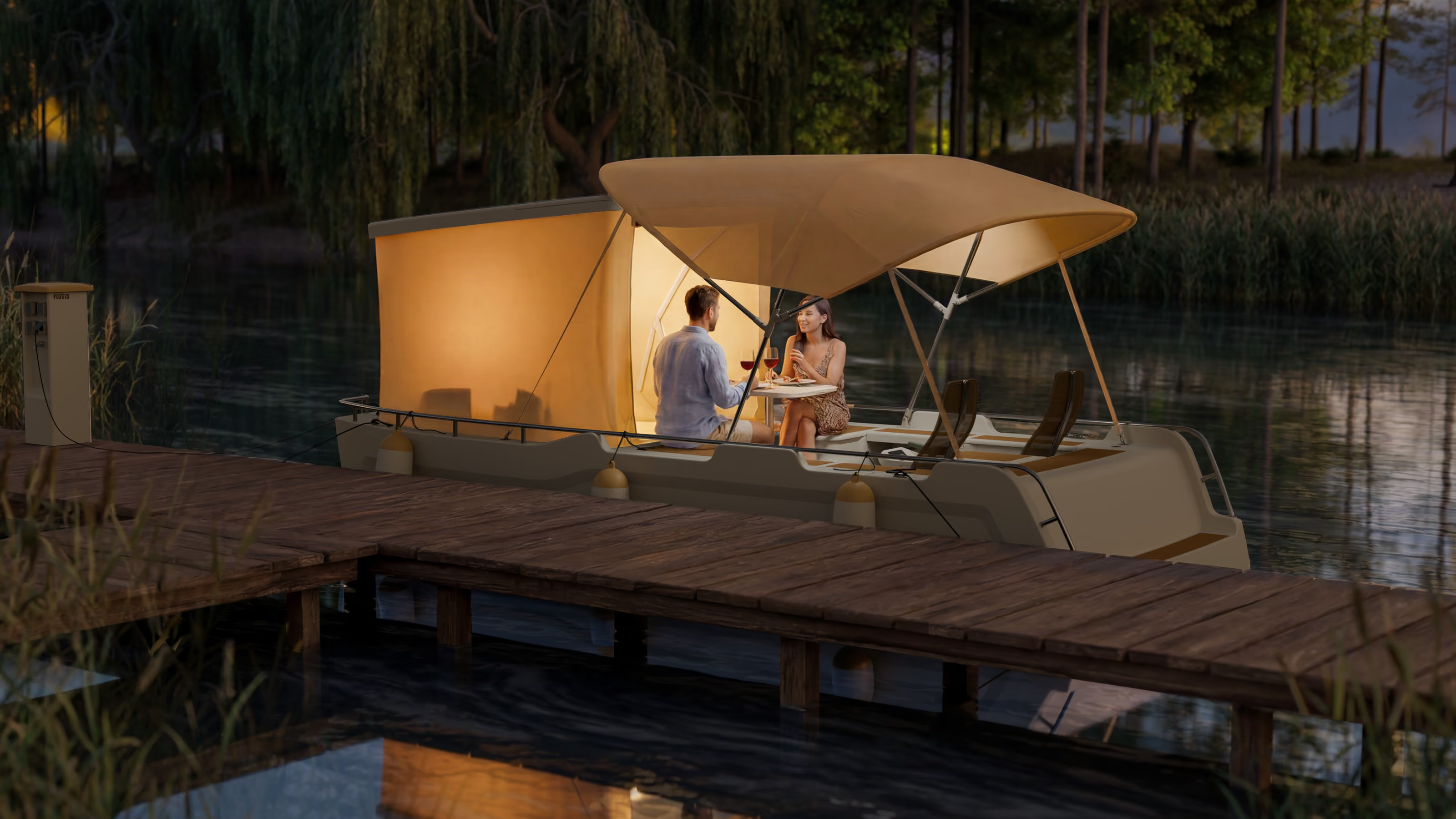
The Fluvia 550 moored at a jetty at dusk, tent-box opened for the night

TECHNICAL DETAILS

HULL & ASSEMBLY

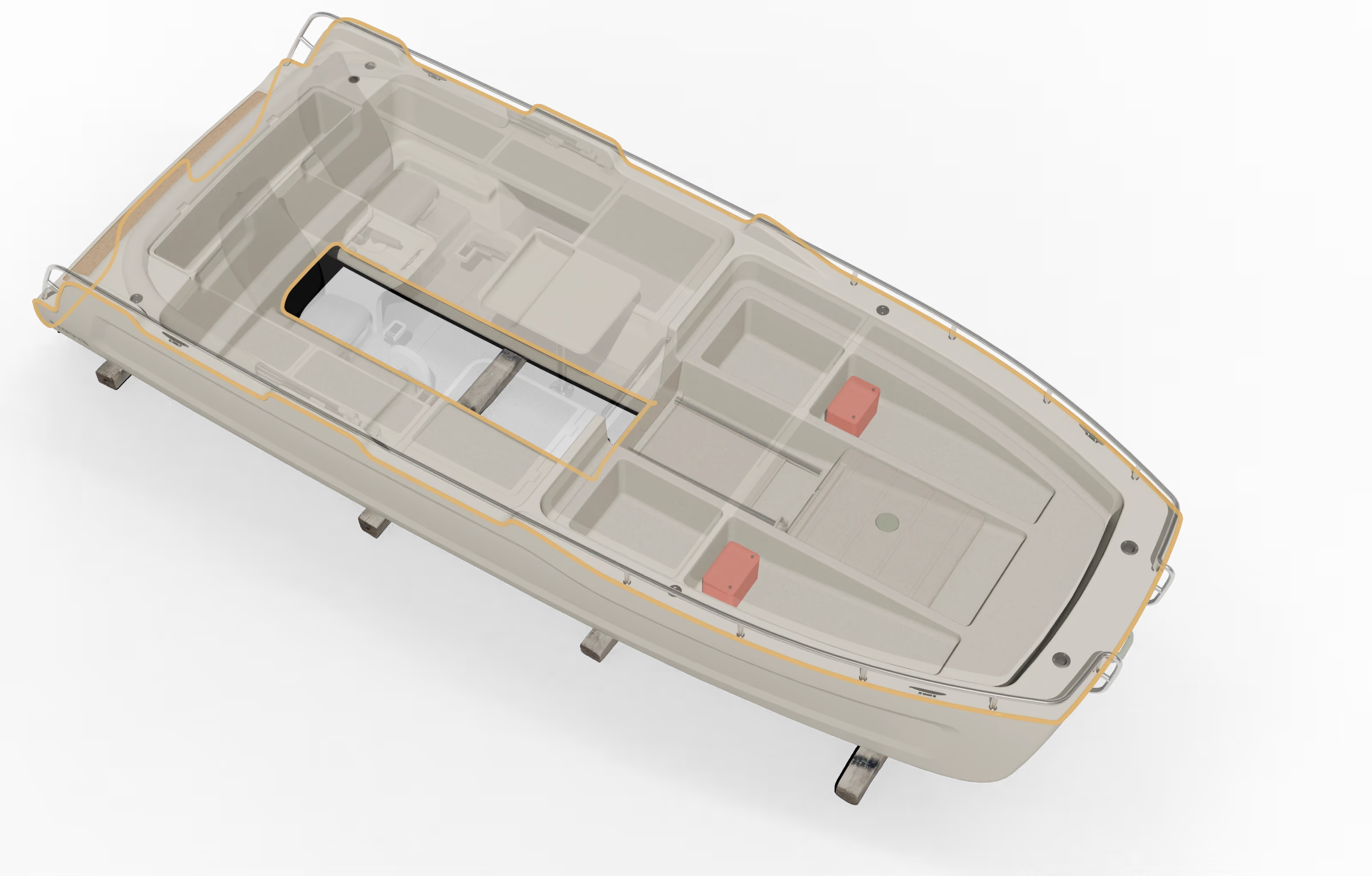
The hull was designed for rotational molding, as this process allows a cost-efficient production even in low quantities. It also enables the use of very robust molds and the pure use of polyethylene without additional materials, supporting a cradle-to-cradle approach. The catamaran shape was chosen to improve stability and tracking performance. Draft angles and drainage channels were added to support manufacturability and keep the deck functional in use.

rotomolded hull (PE)

The rotomolded polyethylene hull from above, annotated

inner parting line

Storage

(bedding, blankets, etc.)

Storage

(table, nav. light, etc.)

outer parting line

water tank

(60 Liters)

power inlet

battery (50 Ah p. U.)

water inlet

cross sections

Seven cross sections of the hull

assembly

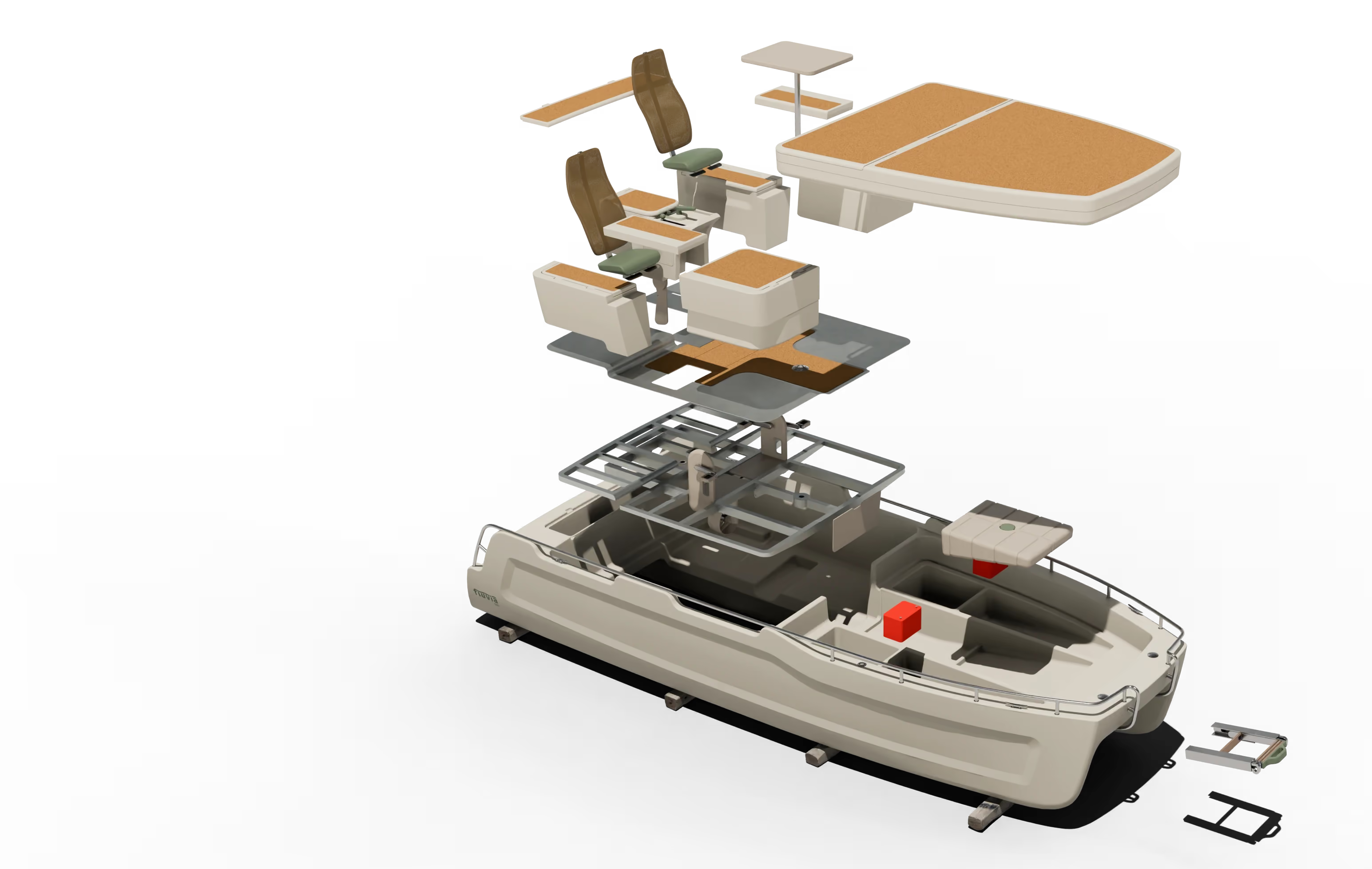
The hull forms the structural basis for all additional components. The cockpit is integrated into the hull with an underbody structure, which then supports the drive system, the floor panel, and the individual living modules such as the pantry and wardrobe.

Exploded view: hull, underbody structure, floor panel, seats, pantry and wardrobe modules

TECHNICAL DETAILS

PROPULSION

drive system

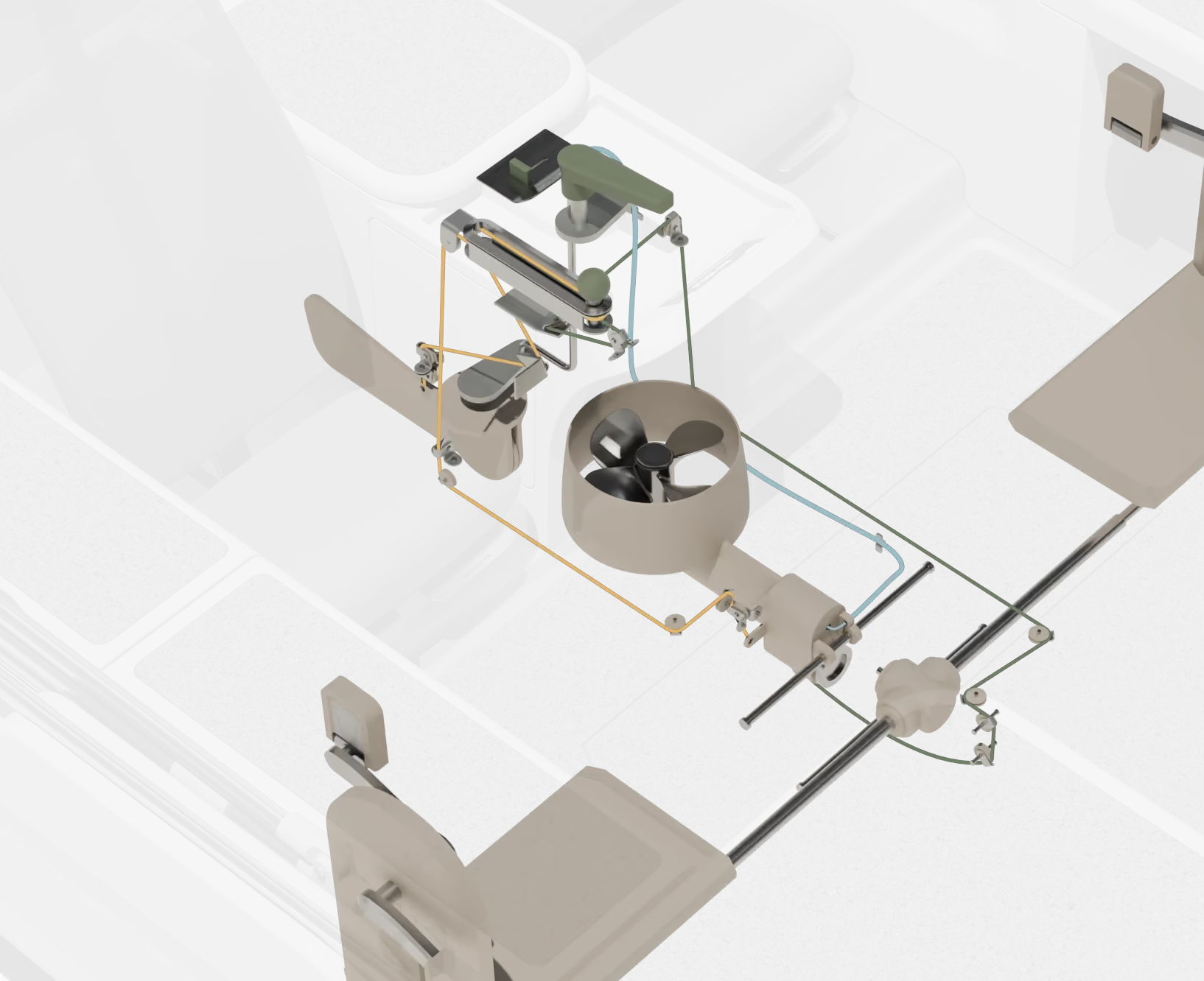
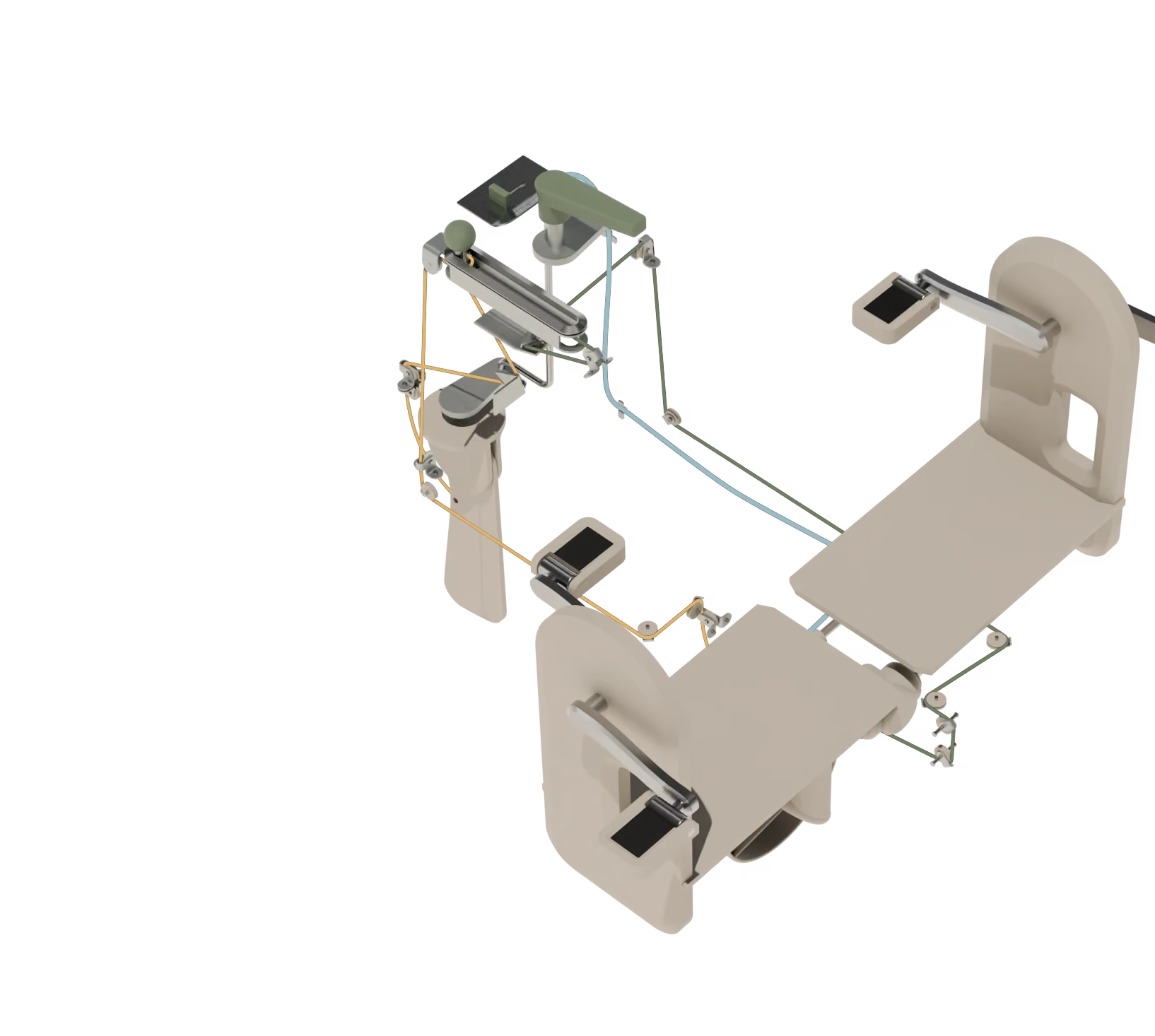
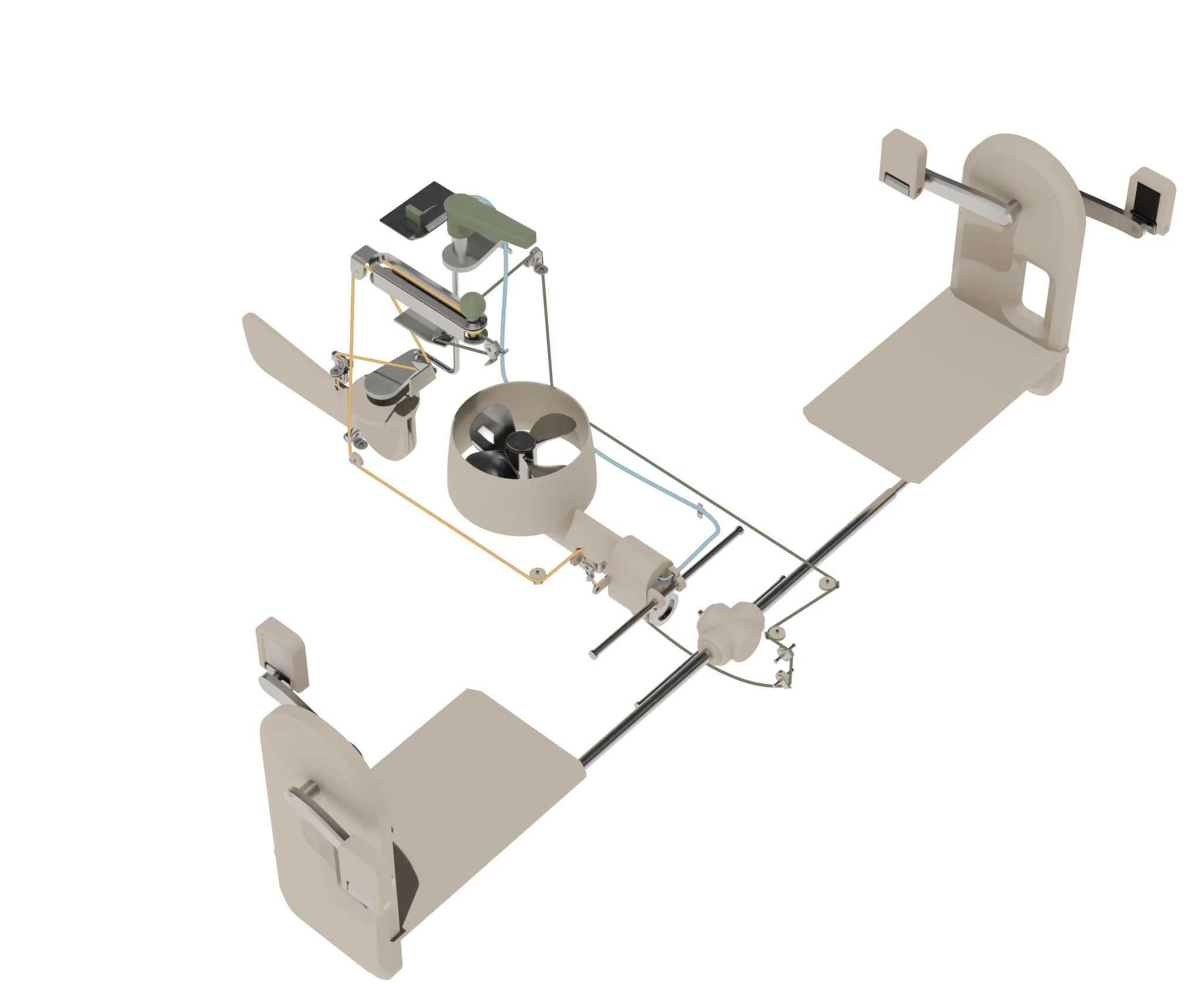
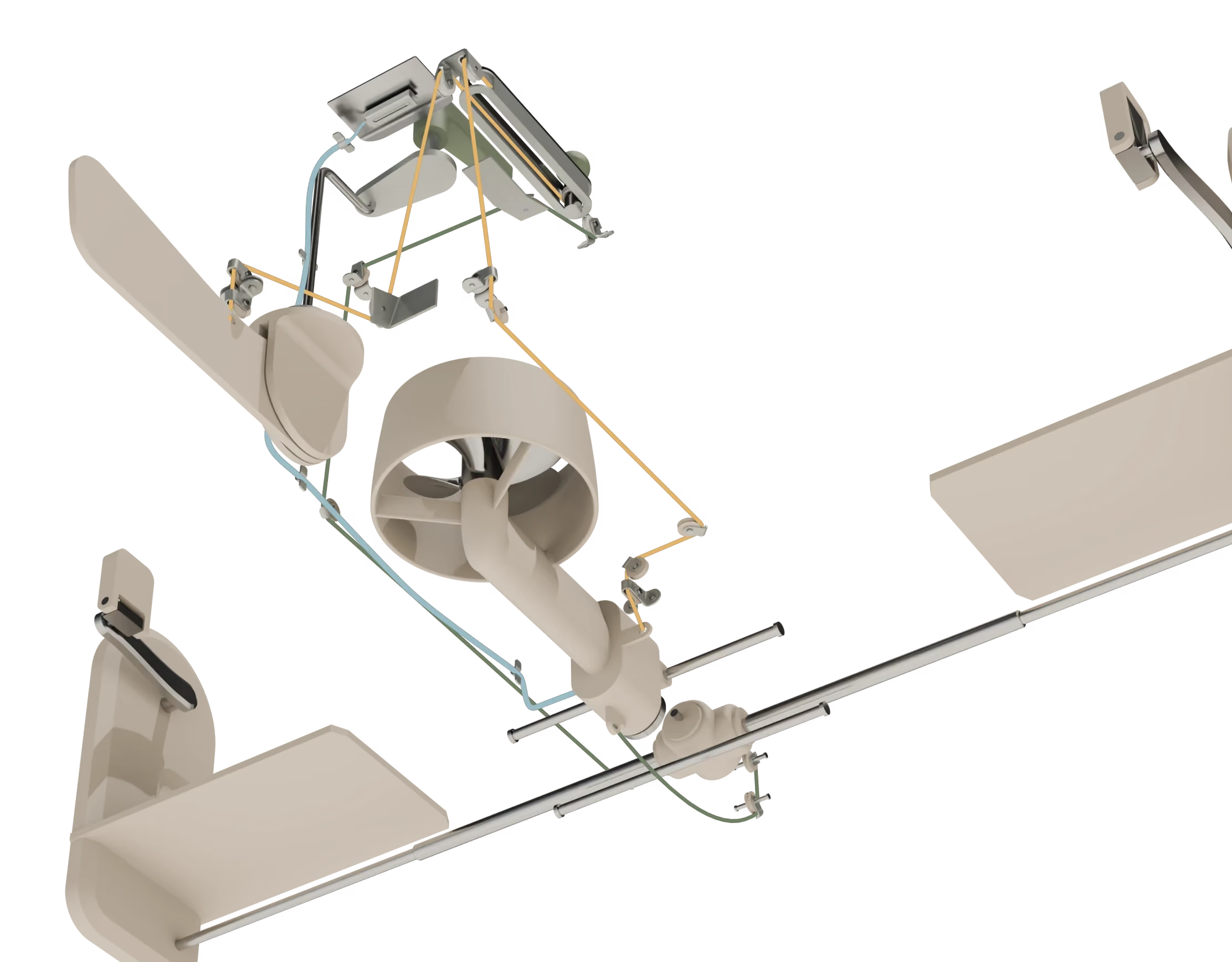
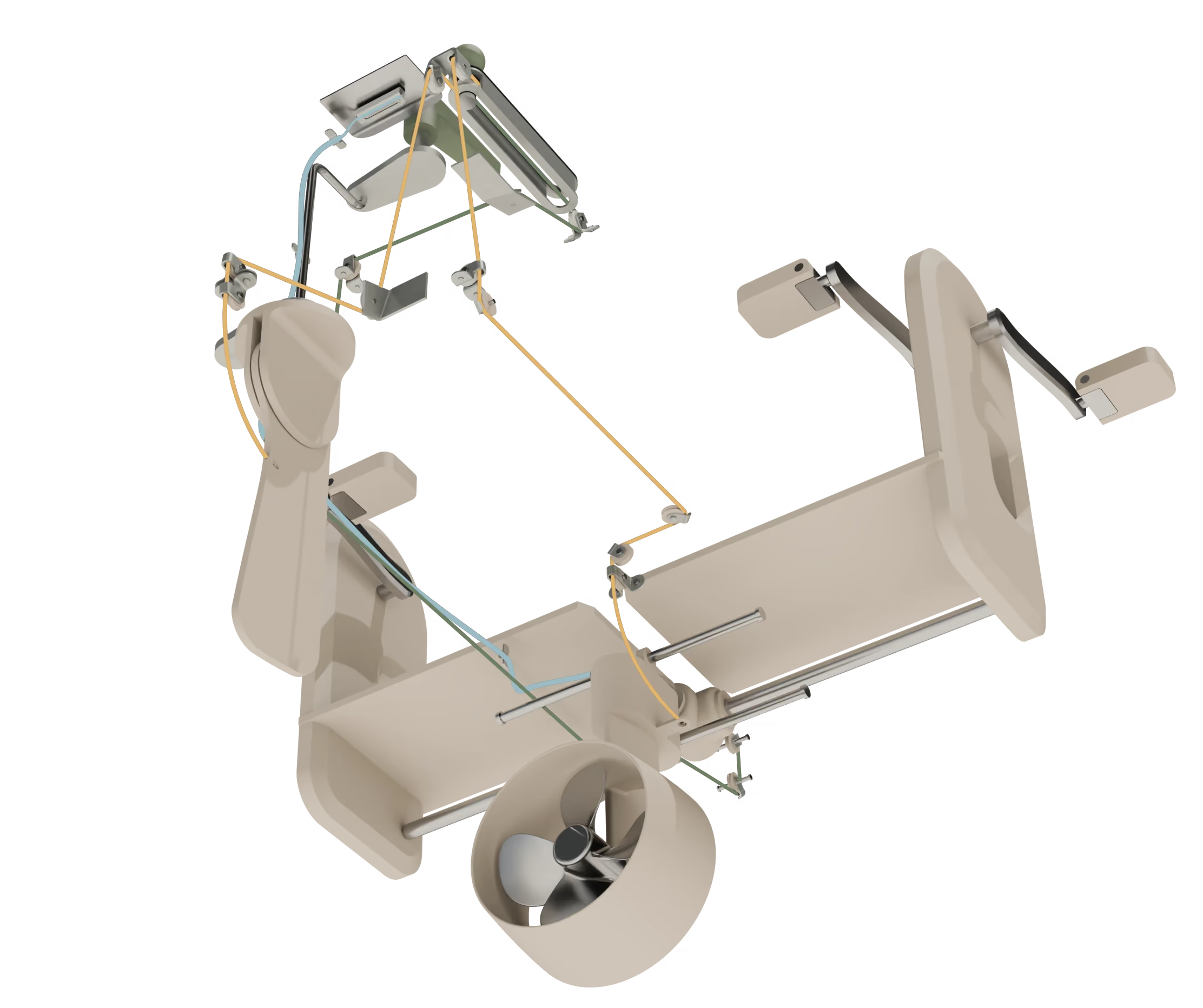
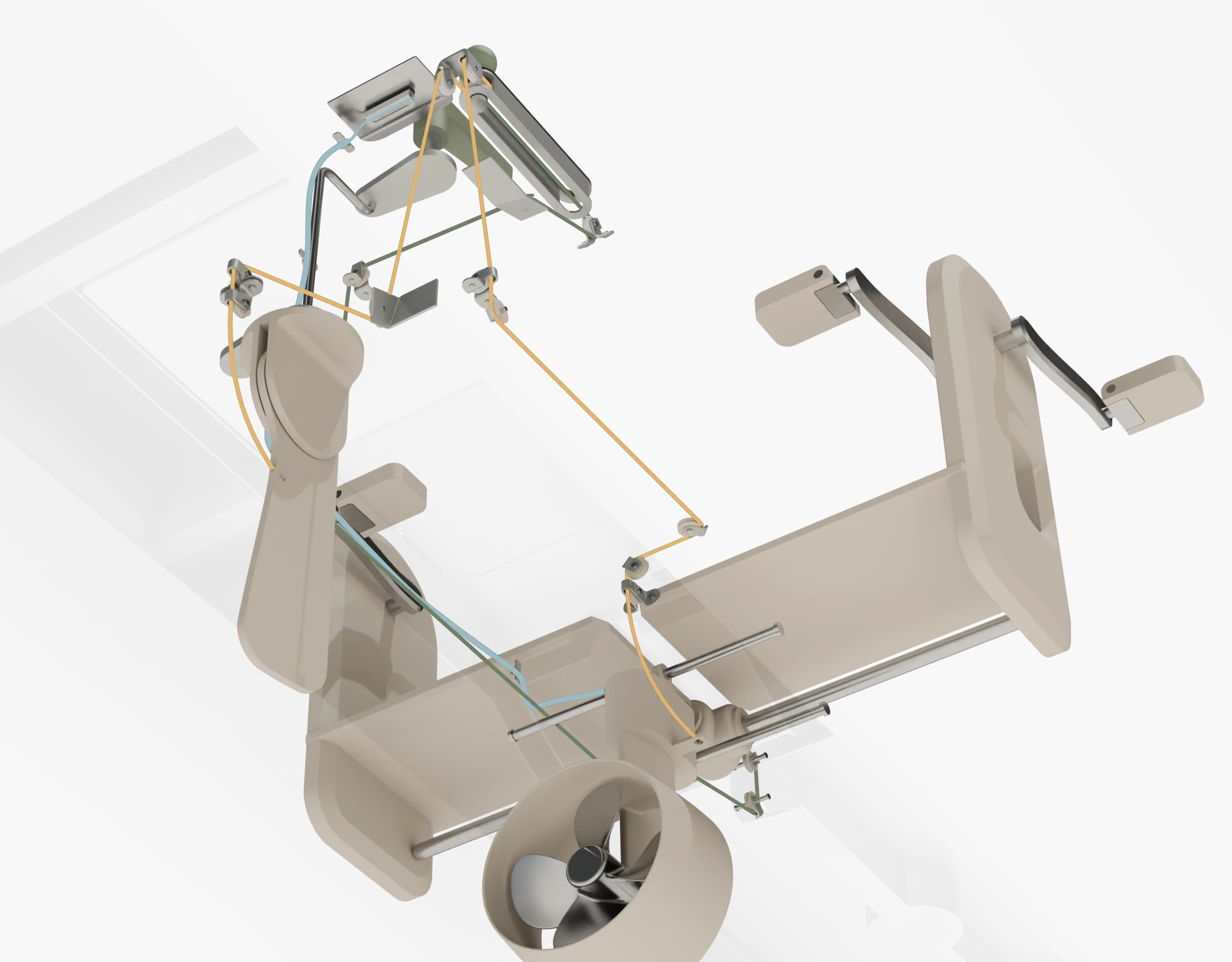
The drive system combines the power from both pedal units into a gearbox and transfers it through a crown wheel to a second gearbox. It offers four gears: reverse and three forward gears, shifted by a cable mechanism with spring assistance.

propeller and kort nozzle

The propeller is fitted with a Kort nozzle, which improves efficiency at low speeds and helps protect it in shallow water. For added safety, both the propeller and the rudder can swing backward on impact.

steering and lifting system

The steering system is connected to the rudder by an offset pushrod. A cable-operated lifting system allows both the propeller and the rudder to be raised out of the water for landing, shallow-water maneuvering, and maintenance. The propeller is additionally secured by a downhaul line to prevent unwanted upward swing in reverse.

The drive system raised out of the water, annotated

gear shift lever

tiller

lever for lifting system

shift cable

rudder

propeller

downhaul line

haul line

output-gearbox

input-gearbox

pedals

out of the water

in the water

haul line

downhaul line

shift cable
The drive system lowered in the water, annotated

gear shift lever housing

lifting system lever housing

shift cable

pedals

haul line

rudder

downhaul line

output-gearbox

input-gearbox

kort-nozzle

propeller
MAKING IT A REALITY

PHYSICAL MODEL

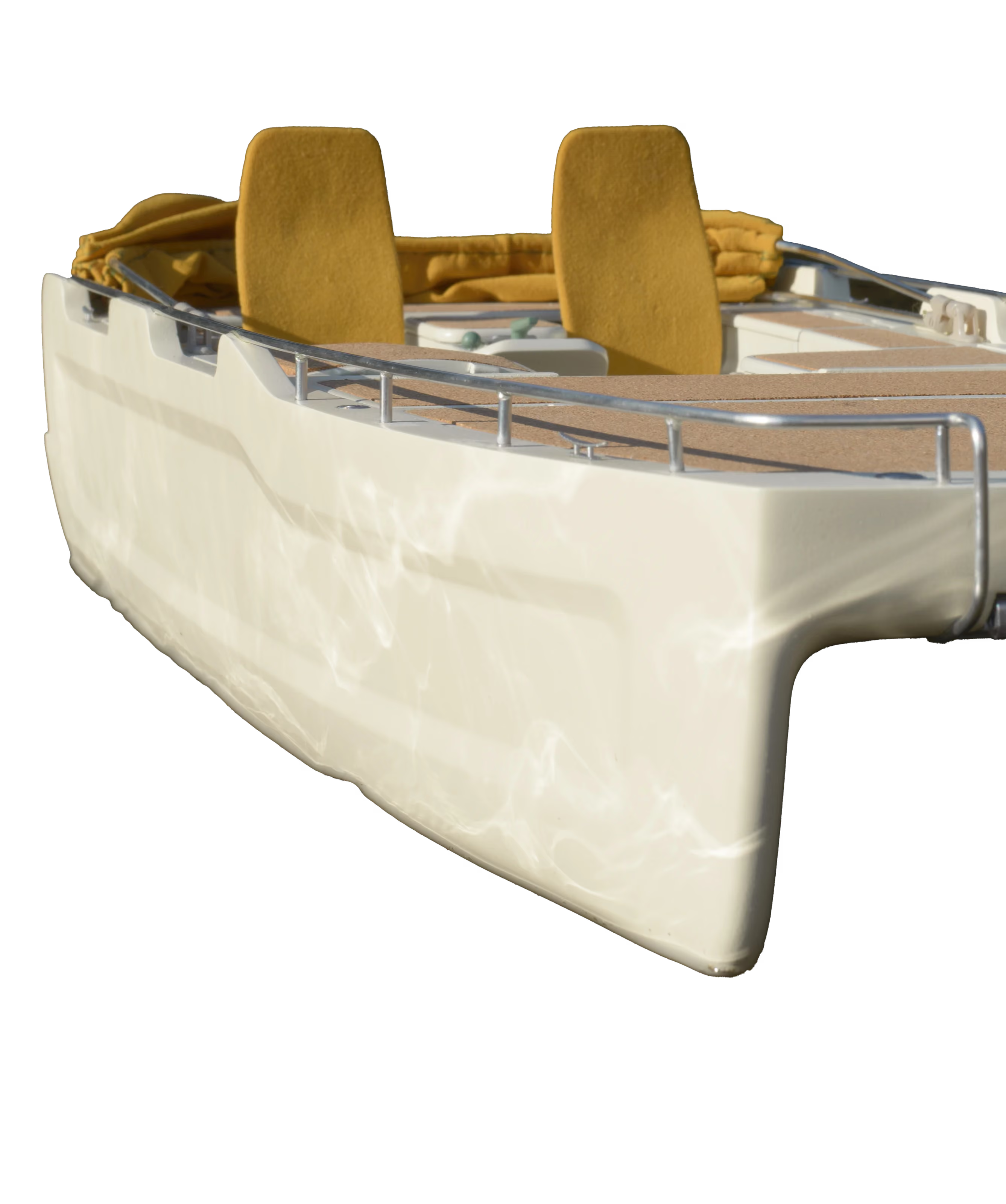
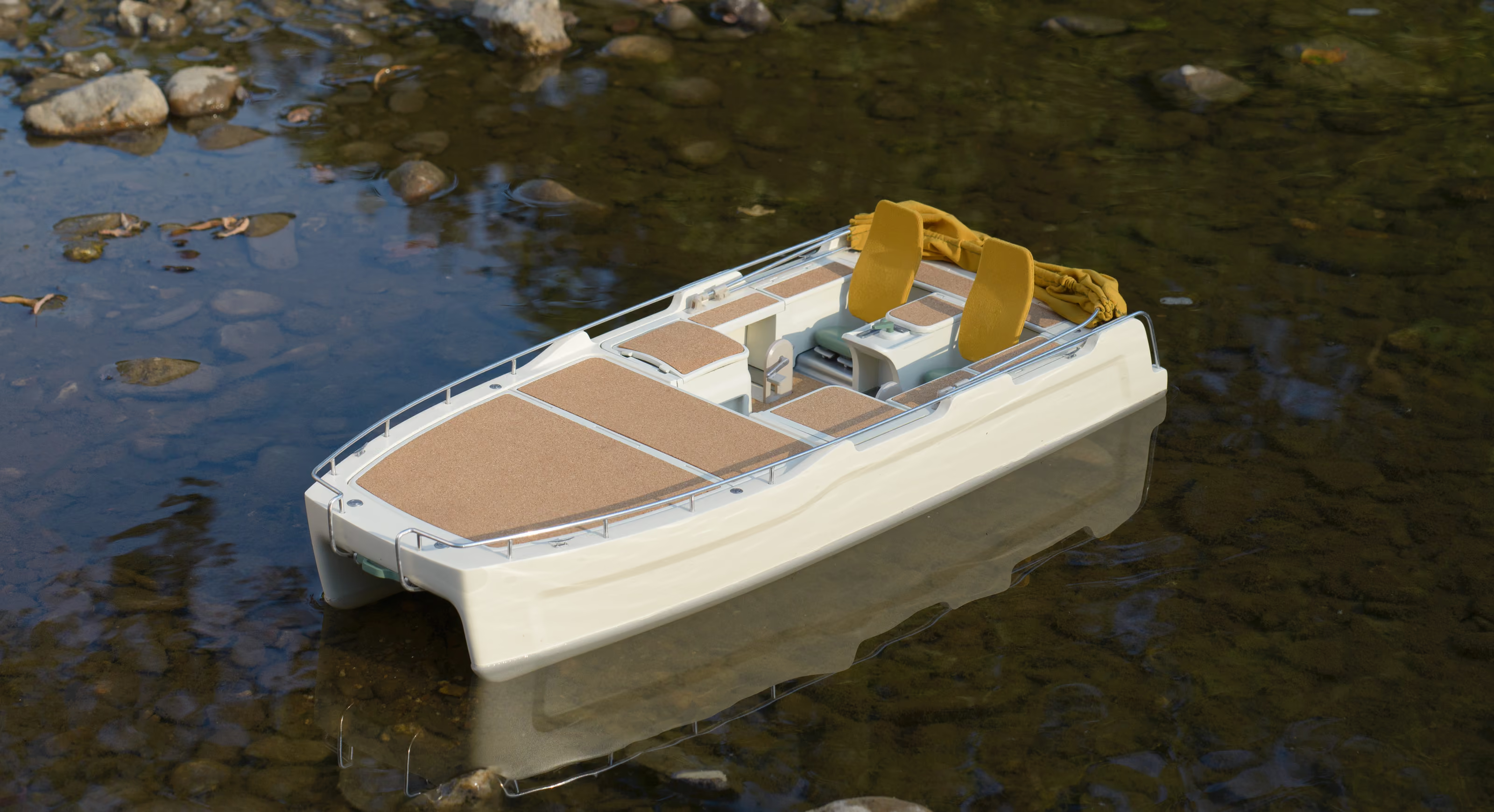
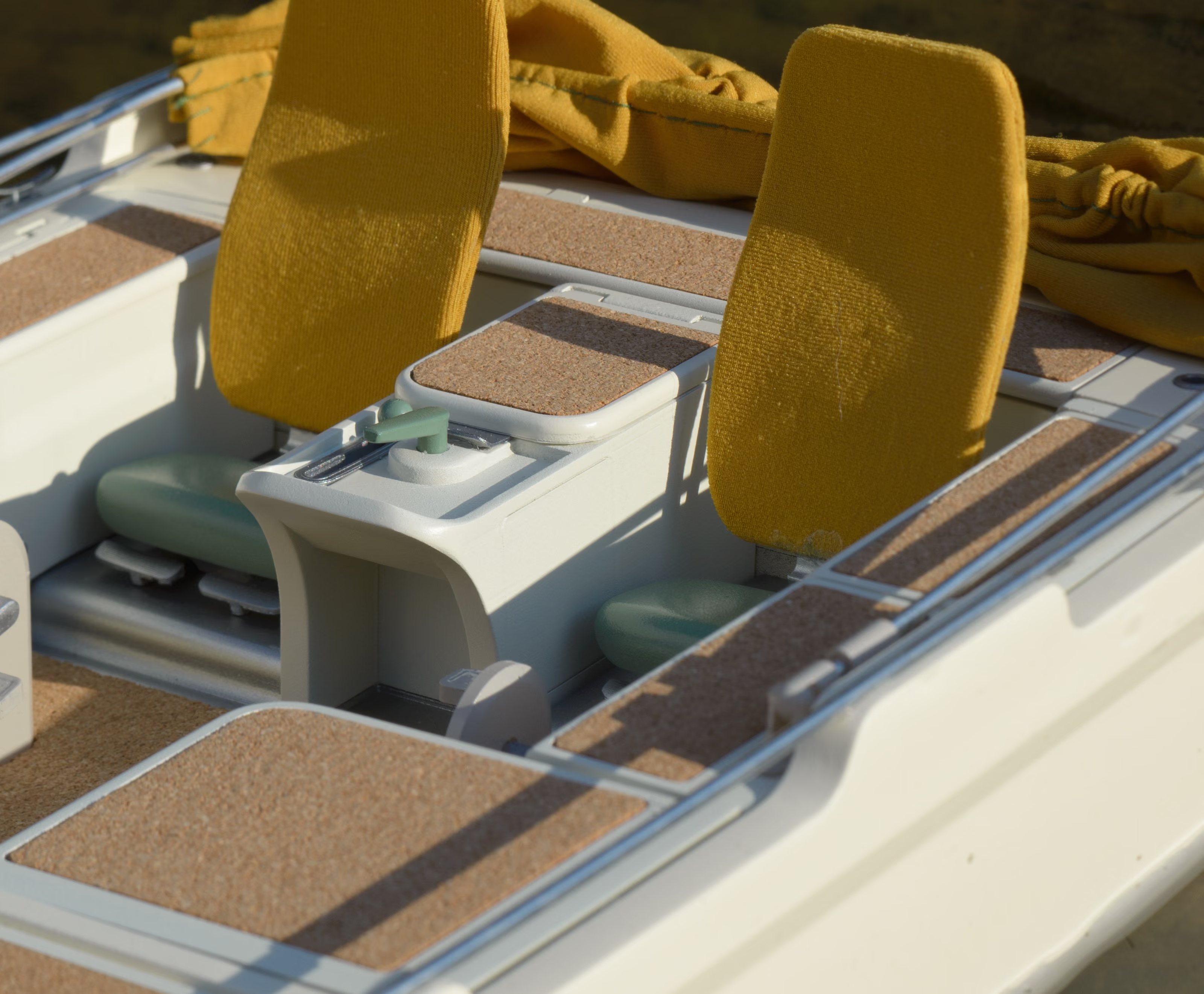
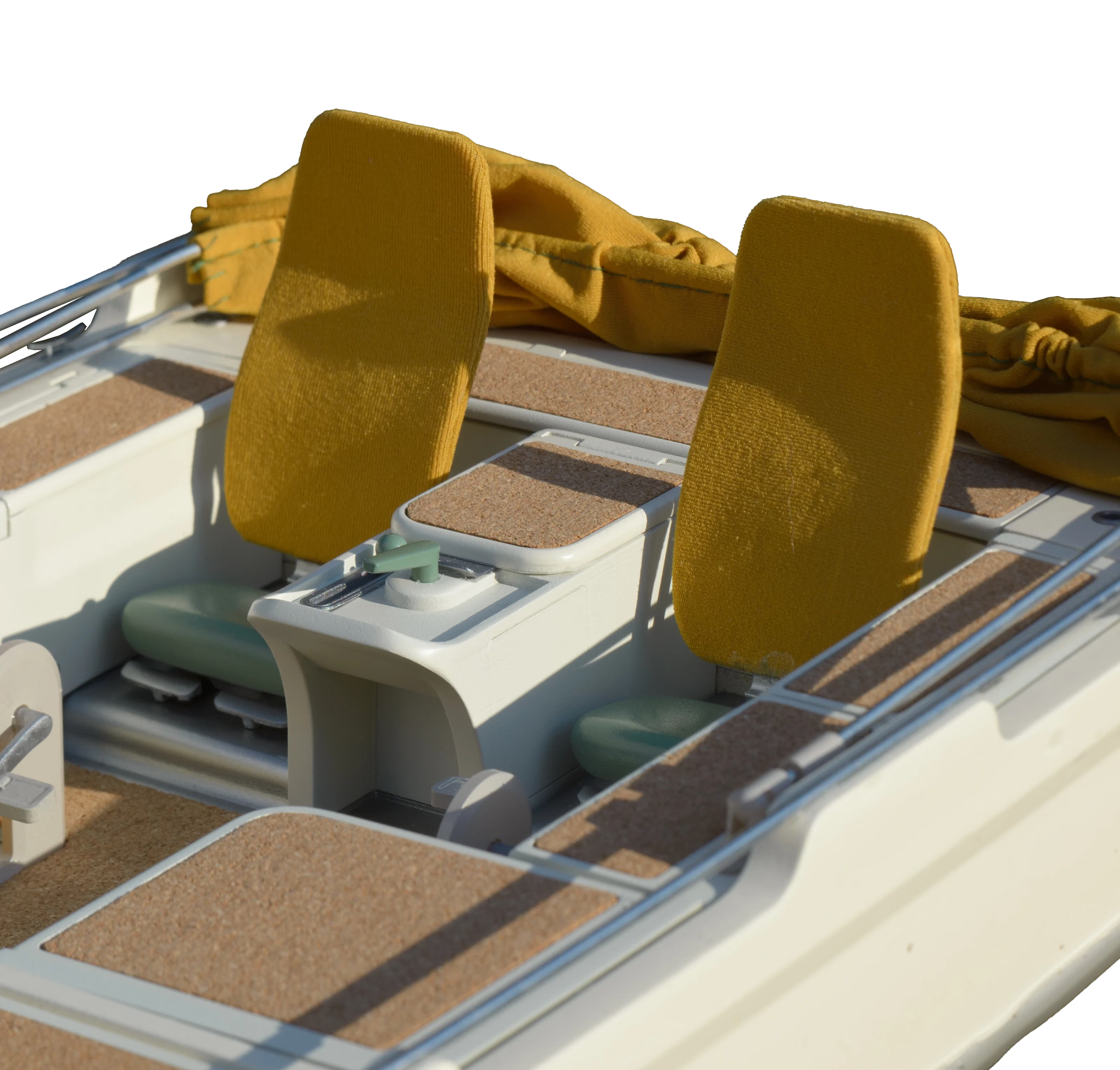
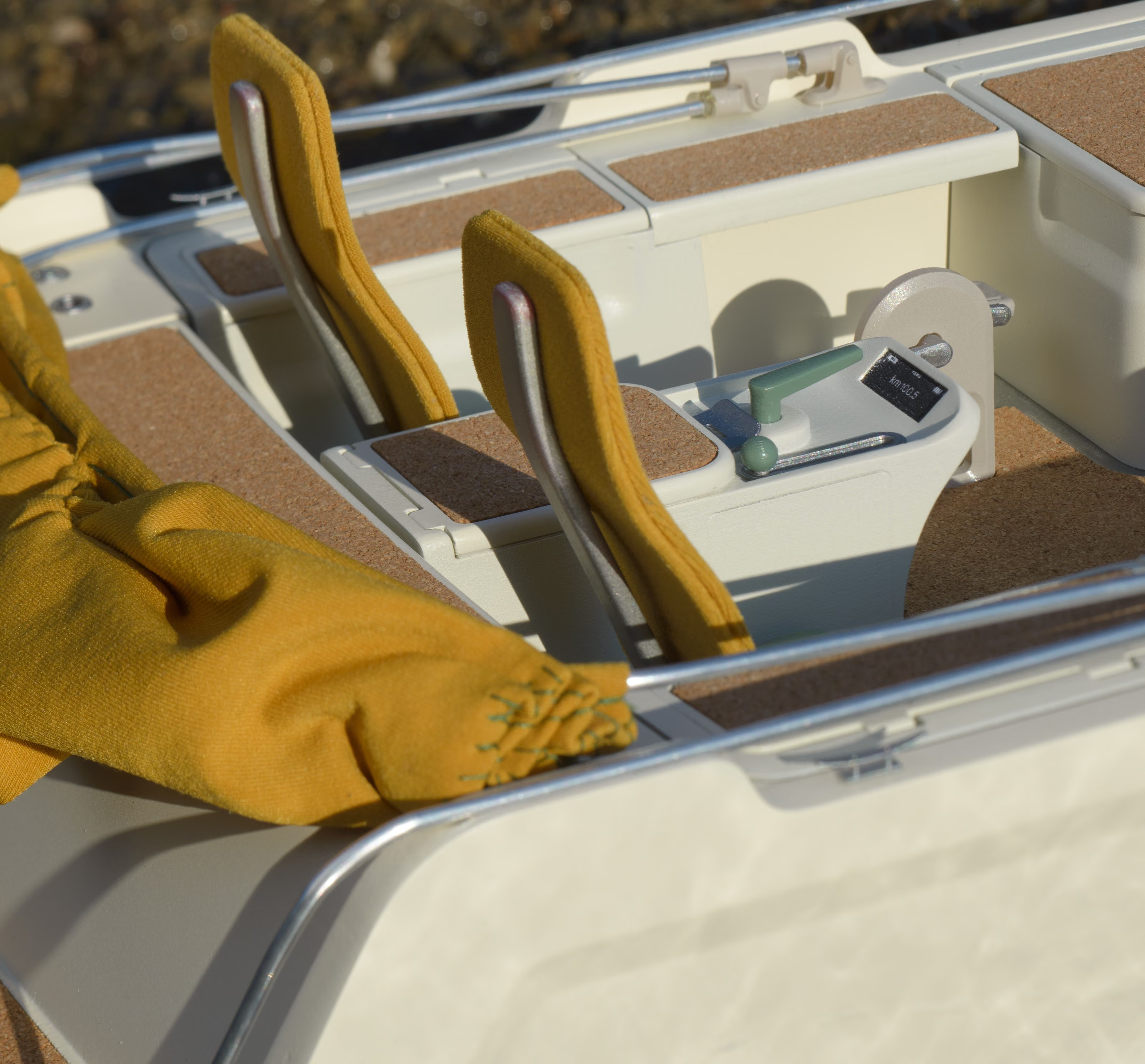
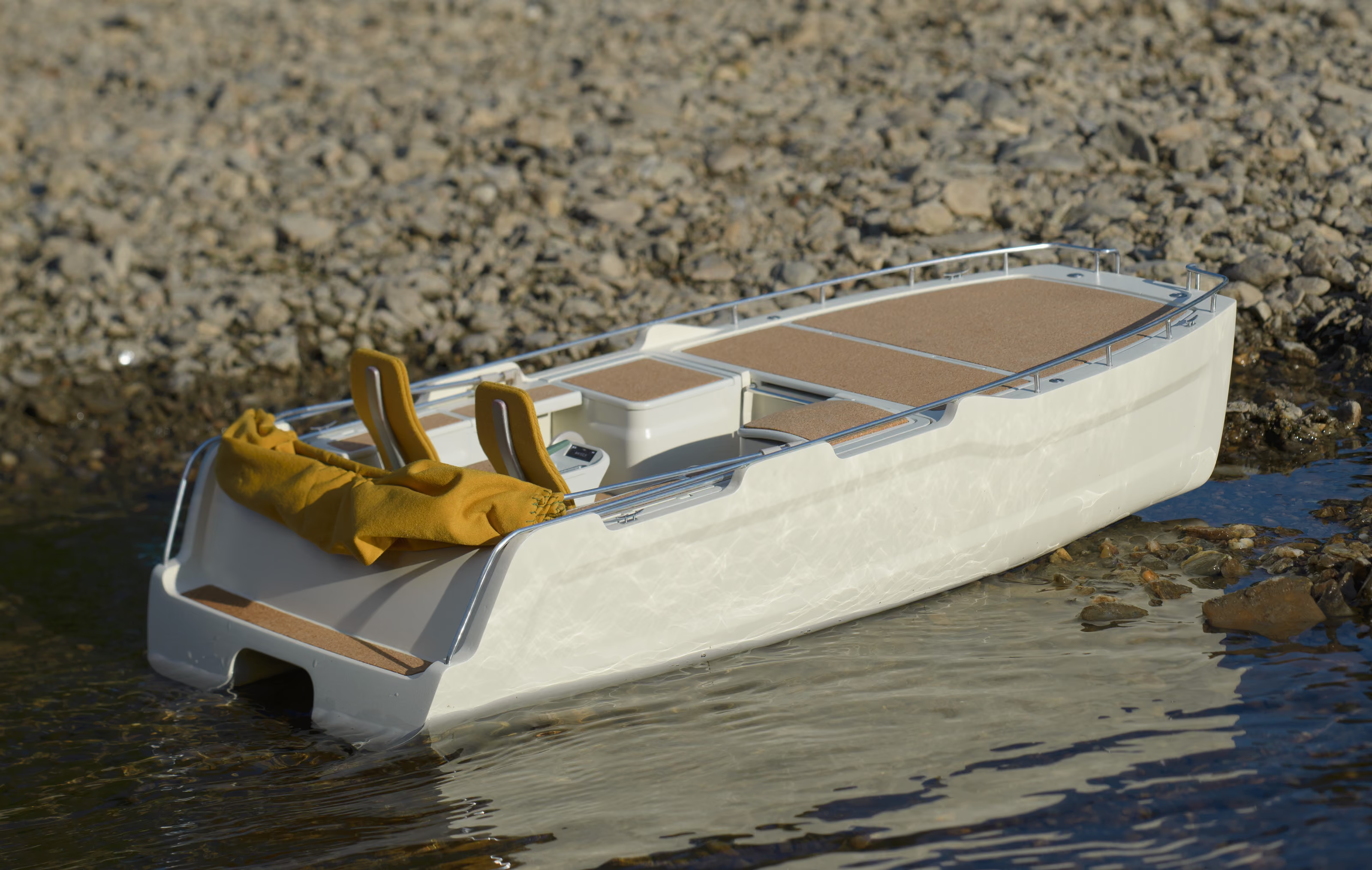
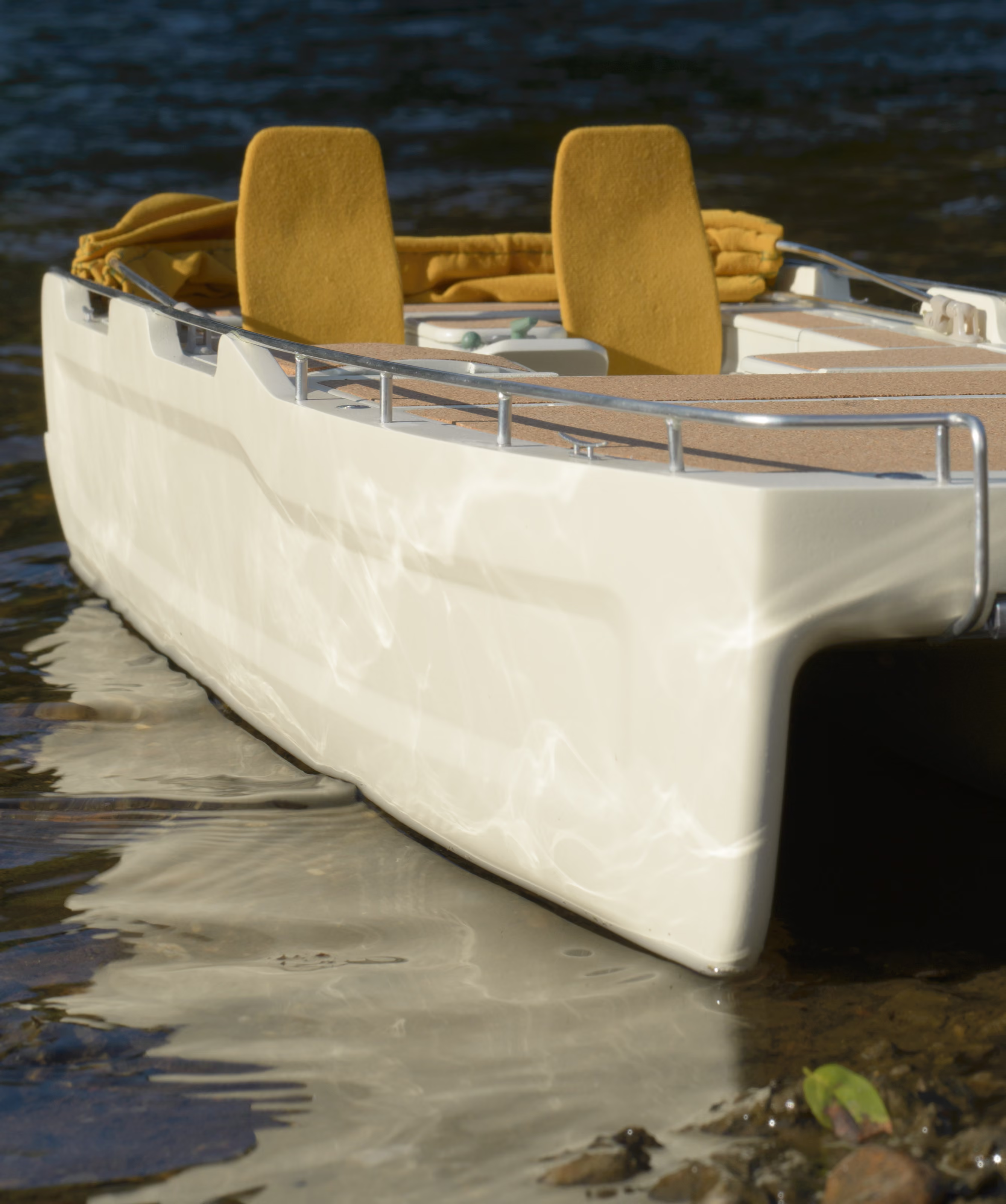
A final 1:10 scale model was built. The hull was CNC‑milled from a rigid polyurethane (PUR) foam block and subsequently complemented with additively manufactured components from resin and FDM 3D printers, as well as hand‑formed elements made from aluminium wire and cork. The completed physical model measures 55 × 21 × 10 cm.

The 1:10 model on a gravel bank, bow close-up
The model floating in shallow water
Cockpit seats and console of the model
Console detail of the model
The model on gravel at the water's edge

images: Florian Riegler